When comparing Puzzle and Ramp for your accounting and expense management needs, understanding the key differences matters. These two tools are often compared but built for entirely different jobs.
Puzzle is AI-native accounting software built to automate bookkeeping, close your books, and give founders real-time visibility into burn rate and runway. Ramp is a corporate card and spend management tool built to control expenses, enforce policy, and capture receipts at the point of purchase.
Startups compare them because they work well together: Ramp handles spend at the source while Puzzle handles what happens to that spend in your books. Treating them as interchangeable creates gaps in your financial stack. Puzzle covers automated bookkeeping, real-time financial reporting, and month-end close. Ramp covers expense management, corporate cards, and spend controls. Many growing startups get the most value from running both, with Brex rounding out the modern fintech stack (see our guide to the best accounting software for Brex users).
TLDR:
Puzzle and Ramp are not competing for the same job. Choosing between them is less a question of which is better and more a question of what problem you're trying to solve right now.
Many startups and growing businesses run Ramp and Puzzle side by side to build a complete financial stack. Ramp handles spend management at the source, from card controls to receipt capture, while Puzzle takes care of the accounting side with real-time, accurate books. Together, they give your team spend discipline and the financial visibility your board and investors expect. It is one of the most practical combinations in the modern fintech stack for startups moving fast.
When Ramp captures a transaction at the point of purchase, Puzzle takes over on the accounting side. Every charge is posted to your general ledger in real time, with the receipt already attached and a category pre-applied based on your chart of accounts. That means your books reflect actual spend as it happens, not weeks later when someone digs through a bank statement. For founders watching burn rate daily, that gap matters.
Puzzle has teamed up with Ramp and Brex to make managing your company's financials easier. As accounting software for Ramp users, Puzzle lets you automatically embed receipts from Brex and Ramp directly into your books so that all transactions are fully visible - giving you greater peace of mind that expenses won't slip through the cracks.
Plus, if you ever need to clarify a transaction (no matter how creative Joe in marketing gets), a simple click gives you access to every detail from those Chucky Cheese bills, thanks to metadata API integrations provided by our friends at Ramp and Brex.
For bookkeepers and auditors, reconciliations can be a tedious task that often doesn't get the recognition it deserves. Puzzle is here to change this with our new reconciliation tool - no more downloading PDFs from your institution (in this case, Brex) and painstakingly studying statements in separate windows!
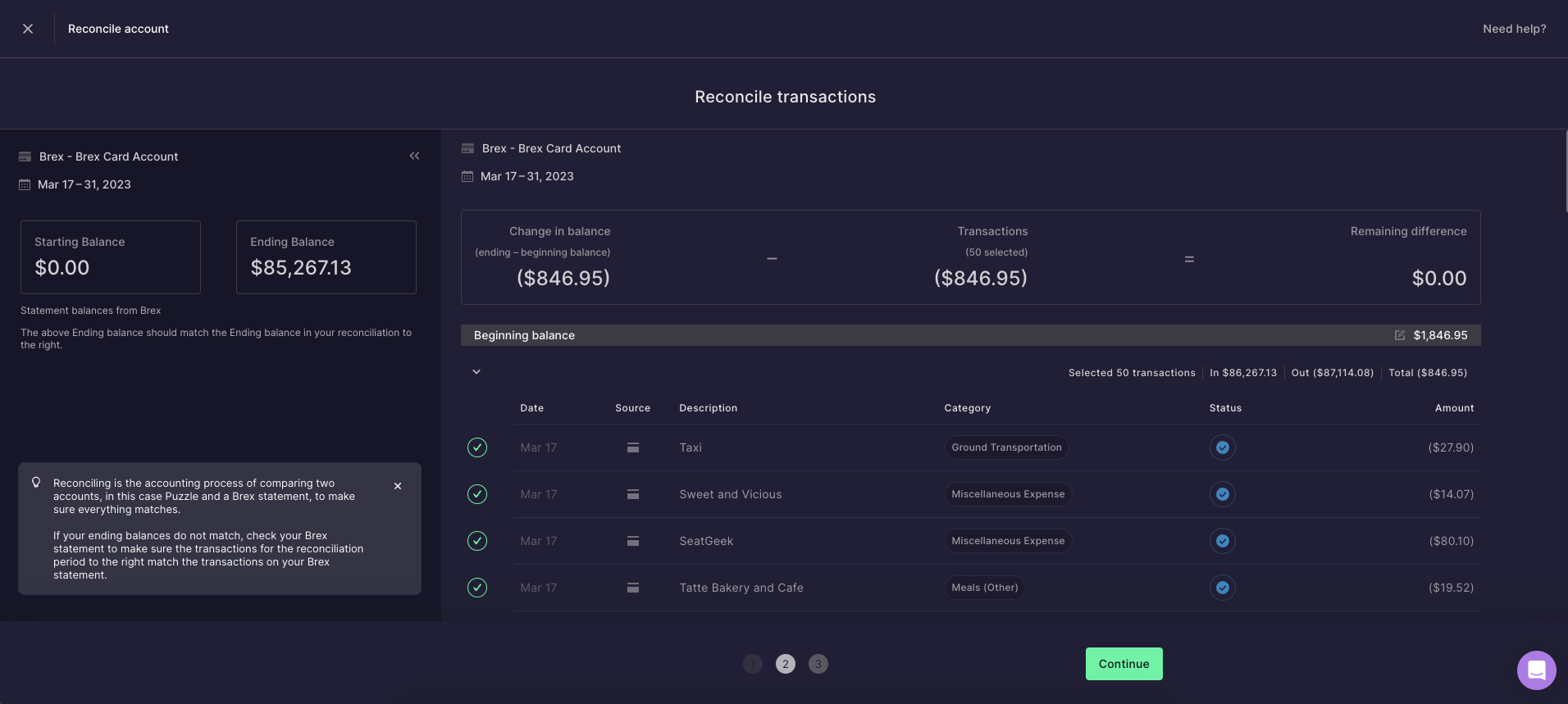
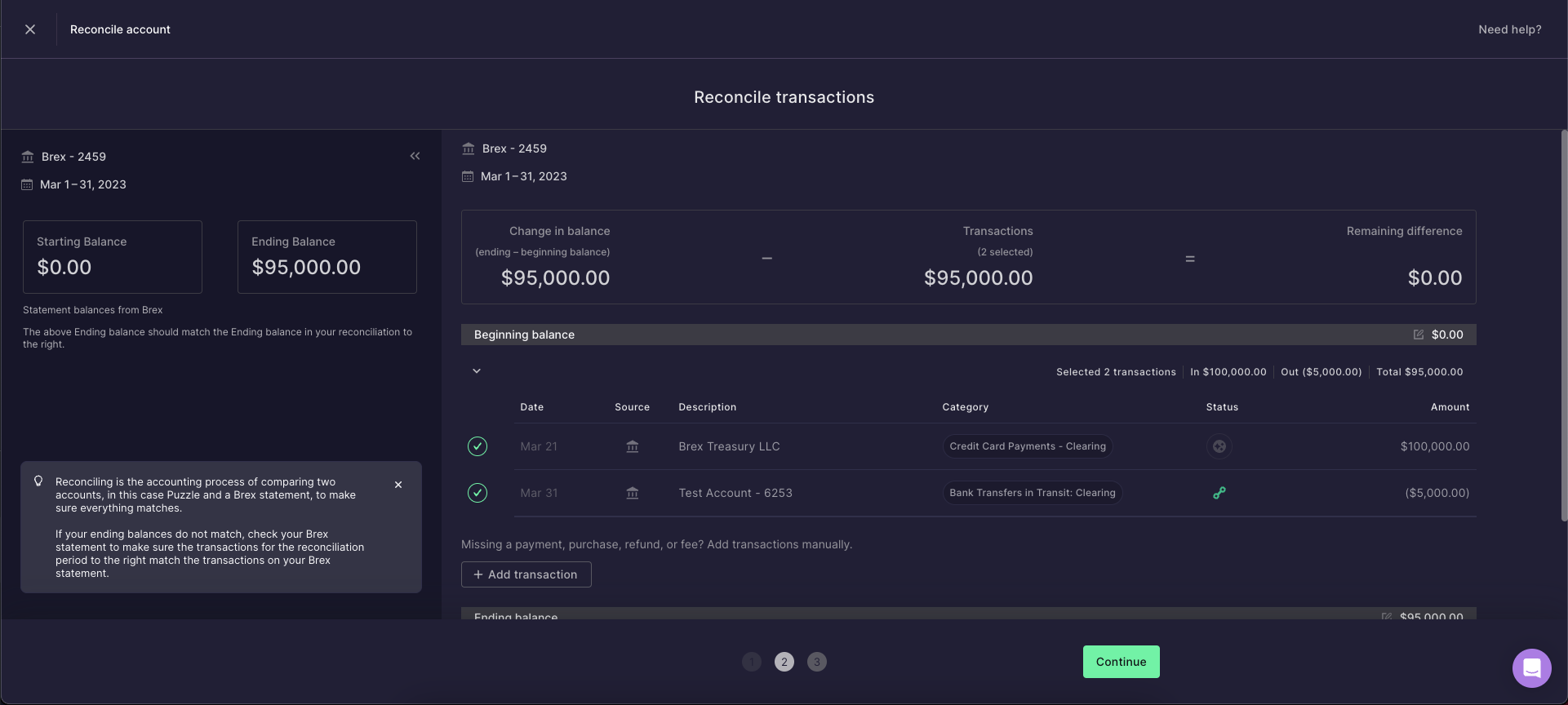
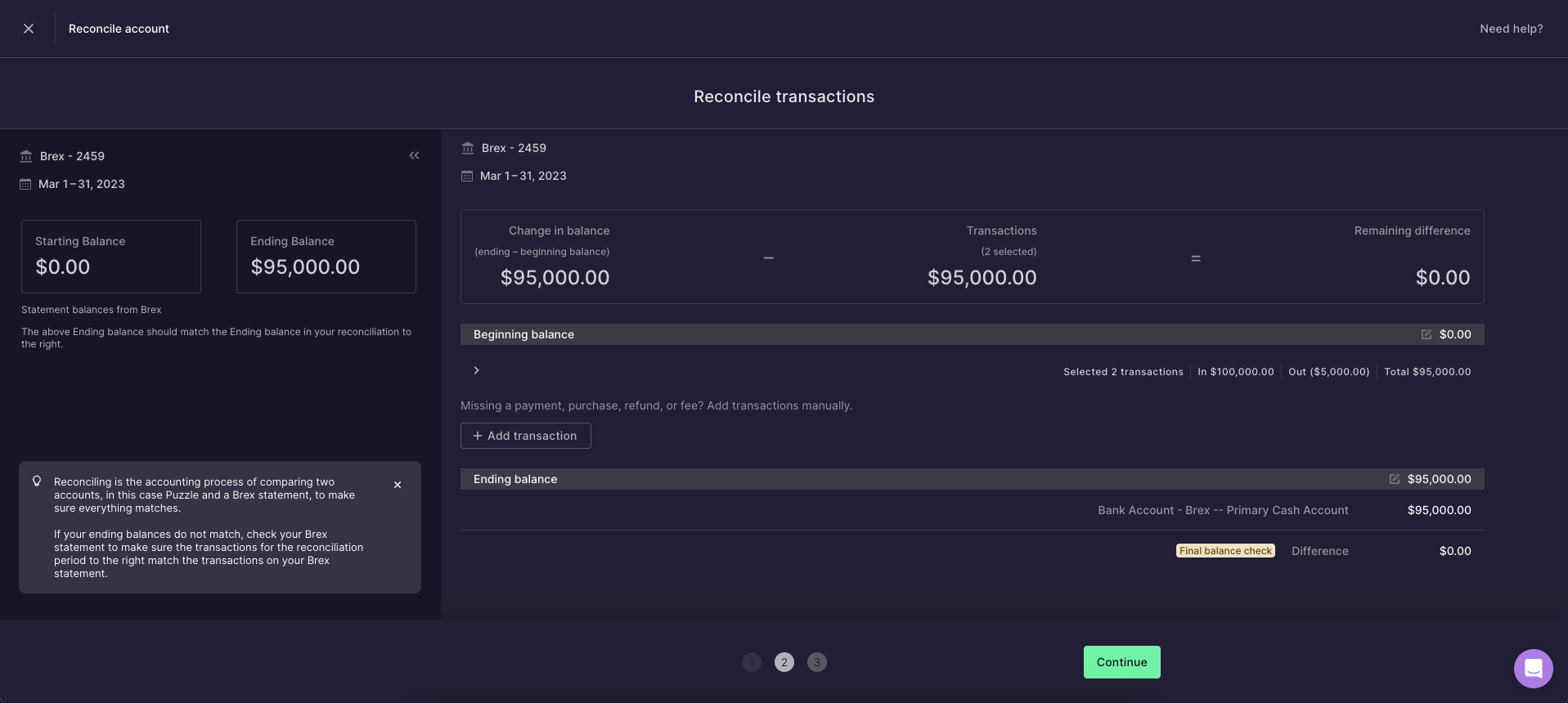
Your Brex statement is automatically drafted inside Puzzle before you even sit down to close the month, so data integrity stays intact and your team saves hours on manual reconciliation.
When you're ready for your statement, it's already there, in your Puzzle dashboard, waiting within an automatically drafted reconciliation so data integrity stays intact while saving precious time.
Keeping all your records in one place goes beyond speed and convenience; it can help you save hundreds, if not thousands, of dollars. Good spend controls are what separate reactive expense reviews from proactive financial management.
With Puzzle’s built-in documentation directly from Ramp, performing complicated tasks like IRS audits, state revenue agencies, investment diligence, or CFO reviews is now faster and simpler, saving you valuable time (and money!).
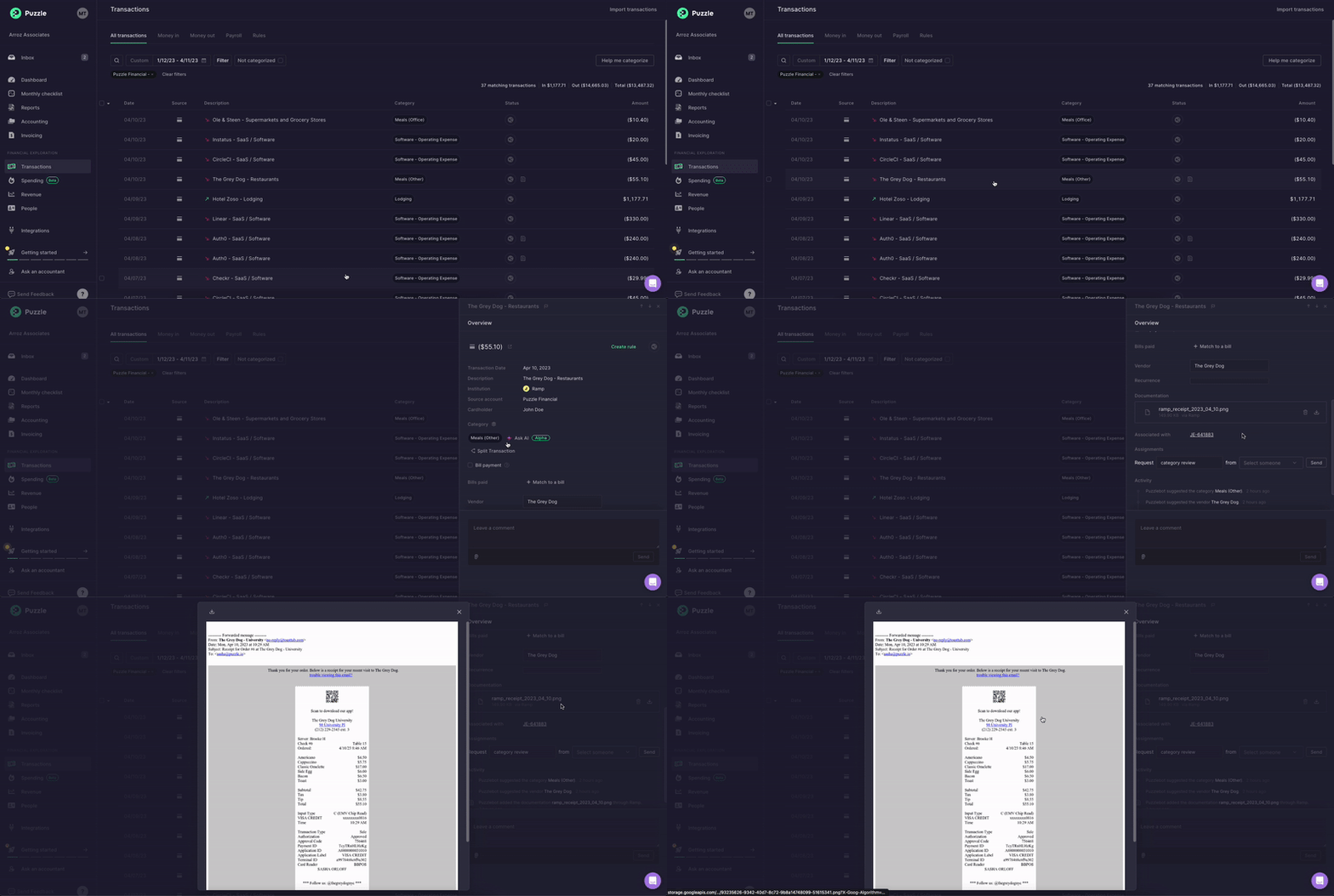
Every Ramp receipt lands in your Puzzle books automatically, giving auditors, investors, and CFO reviewers instant access to source documents without any manual sorting.
No more wasting precious resources sorting through piles of paper. You can now access all the information you need with a few clicks. If you're paying an auditor or CFO by the hour, they will breeze through the work in a fraction of the time.
Ramp and Puzzle connect through a direct metadata API integration. When your team makes a purchase on a Ramp card, the transaction appears in Puzzle within minutes: the receipt is already attached, the merchant details are carried over, and a category has been pre-applied based on your chart of accounts. No manual data entry, no chasing receipts after the fact.
The data that flows between the two systems includes card transactions, bill payments, reimbursements, receipt images, and merchant details. Puzzle takes all of it and posts each item to the general ledger in real time. Every transaction is tied to its source document, so your audit trail is complete without any extra work.
The practical result is a sharp drop in month-end close time. With up to 50% less manual categorization work and transactions pre-matched to bank statements before you even open the books, your team spends less time on data entry and more time on the financial decisions that matter. When an employee makes a purchase on a Ramp card, it is ready for a quick review in Puzzle rather than manual entry. Following corporate card best practices helps teams get the most out of this setup.
| Pros | Cons |
|---|---|
| Automated bookkeeping up to 98% accuracy | Newer accounting software with a growing user base |
| Real-time burn rate and runway visibility | Focused on US startups |
| GAAP-compliant financial reporting | Requires a modern fintech stack to get full value |
| Dual-basis accounting (cash and accrual simultaneously) | |
| Deep integration with Ramp and Brex |
| Pros | Cons |
|---|---|
| Free to start | Not a full accounting solution (no general ledger) |
| AI-native spend insights and savings | Requires separate accounting software for complete books |
| Automated receipt capture at point of purchase | Primarily expense-focused |
| Bill pay and reimbursements included |
Puzzle and Ramp serve different but complementary purposes in your financial stack. Neither replaces the other, and treating them as interchangeable creates gaps in how you manage money and report on it.
Ramp handles expense management: corporate cards, spend controls, receipt capture at the point of purchase, and bill pay. Puzzle handles accounting: automated bookkeeping, real-time financial reporting, and month-end close. The gap between those two jobs is exactly where most startups run into trouble, trying to use one tool for work the other was built to do.
For most startups and growing businesses, the best answer is using both together. Ramp controls spend at the source; Puzzle takes care of what happens to that spend in your books. Together, they give you spend discipline and the financial visibility your board and investors expect, without a full-time bookkeeper.
Ready to see Puzzle in action? Book a demo to learn how Puzzle pairs with Ramp to keep your books accurate in real time.
Puzzle and Ramp serve different jobs in your financial stack. Ramp handles corporate cards, spend controls, and receipt capture at the point of purchase; Puzzle handles automated bookkeeping, real-time financial reporting, and month-end close. Most startups get the most value from running both together.
Connect Ramp to Puzzle through their direct metadata API integration. When a purchase hits a Ramp card, the transaction appears in Puzzle within minutes with the receipt already attached, merchant details carried over, and a category pre-applied, so your books reflect actual spend in real time without manual data entry.
With transactions pre-matched to bank statements and up to 50% less manual categorization work, your team spends less time on data entry during close. Ramp captures and categorizes spend at the source; Puzzle posts it to the general ledger automatically, so your books are largely ready for review before the month even ends.
Puzzle is the right tool for burn rate and runway tracking. Ramp shows you what your team is spending; Puzzle takes that spend data and gives you a real-time view of cash position, burn rate, ARR, and runway updated daily. This delivers the financial visibility your board and investors expect.
Yes. Because Puzzle pulls receipt images and merchant details directly from Ramp, every transaction in your general ledger is tied to its source document automatically. That complete audit trail makes IRS audits, investor diligence, and CFO reviews faster, without any manual receipt sorting.