What we hear from our clients often is that they are not worried about AI replacing accountants. They are worried it’ll expose how much of our time isn’t actually accounting.
The Puzzle Team
3.3.26
Last updated
November 5, 2026
In article:
Accounting. Simplified
A bad product lacks competitive advantage. Successful businesses have something unique that's hard to copy. It could be cost efficiency, brand power, or proprietary tech. Without this, you're just waiting to get outperformed. Think of physical retailers being outperformed by e-commerce.
Thank you for being part of our Puzzle community. Stay tuned!
Oops! Something went wrong while submitting the form.
AI is not replacing accounting jobs. It’s improving them.
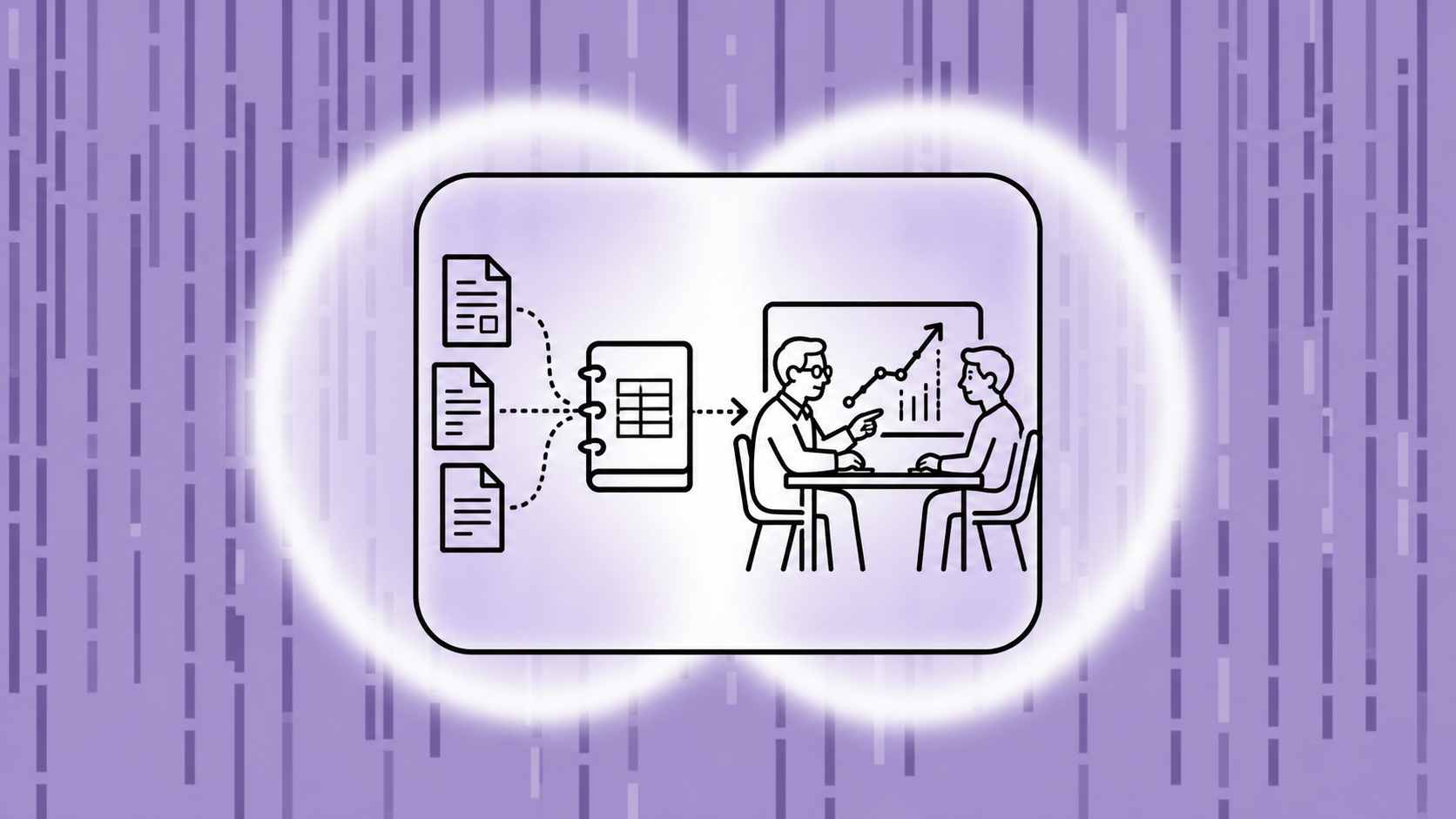
What we hear from our clients often is that they are not worried about AI replacing accountants. They are worried it’ll expose how much of our time isn’t actually accounting.
That concern is not without merit. And if you look closely at how most firms operate today, you’ll see that the real issue isn’t existential. It’s structural.
Senior accountants are still reviewing low-risk transactions. Month-end close still feels like a scramble. Advisory is still just wishful thinking, instead of order of business. And margin is still tethered to headcount.
That’s not a profession being automated away. That’s a workflow that hasn’t evolved at the pace of the businesses it serves.
And AI doesn’t eliminate that tension. It exposes it.
TLDR:
AI compresses repetitive accounting work; judgment, advisory, and oversight stay human.
30% of accountants cite manual data cleanup as the top barrier to advisory work (Intuit, 2026).
Cutting senior cleanup from 40 to 10 hours/month at $120/hour recaptures $400K+ annually.
Month-end close stops being recovery and becomes review when automation handles the volume.
Puzzle is an AI-native accounting firm where AI drafts entries and accountants approve every result.
Familiar fear and predictable pattern
Every major shift in technology triggers the same reaction. We see what changes immediately, and we assume that’s the whole story.
We saw spreadsheets and assumed fewer accountants. The profession grew.
We saw ATMs and assumed fewer bank tellers. Instead, ATMs cut the cost of running a branch, so banks opened more of them (urban branches rose 43 percent, according to economist James Bessen's 2015 analysis) and tellers shifted into higher-value roles.
Now we see AI drafting journal entries or categorizing transactions in seconds and assume the human role must shrink.
But that assumption quietly rests on a fixed-pie view of work. As if there is a capped amount of accounting to be done and automation simply takes a slice away.
In reality, the demand for financial clarity has never been higher. Transaction volume increases every year. Subscription models add layers of complexity. Investors expect real-time metrics. Founders want answers now, not three weeks after close.
The pie expands. The work moves.
The firms that struggle are not those facing automation. They are the ones trying to layer automation on top of an operating model built for manual effort.
What AI actually changes in accounting
AI does not replace judgment. It compresses repetition.
And that compression is where the gain lives.
Take a typical firm serving 100 clients at roughly 12 hours per month each. That’s 1,200 hours of work.
If 60 percent of that time is spent on cleanup, reconciliation, and repetitive validation, that’s 720 hours devoted to low-risk activity.
Now assume AI reduces that cleanup burden by 75 percent.
You recover roughly 540 hours per month.
That’s not theoretical savings. That’s the equivalent of three full-time team members worth of capacity, without hiring a single person.
The work didn’t disappear. It moved.
From processing to advising
The most visible shift is speed. Close happens faster. Draft entries appear automatically. Reconciliations don’t require hours of spreadsheet wrangling.
But the meaningful shift is conversational.
Instead of “what happened last month,” the client conversation becomes “what does this mean for next quarter.”
Instead of chasing receipts and debugging exports from middleware connectors, your senior accountants are reviewing drafted entries with full traceability and focusing on interpretation.
That is the difference between processing and advising.
When revenue flows directly from Stripe into a clean subledger, then into the general ledger, with automated revenue recognition schedules and full audit trails, something subtle but important happens.
Close stops being recovery. It becomes review.
Fondo reported a 60 percent reduction in revenue recognition time using Puzzle’s native Stripe integration, according to Puzzle’s Fondo case study. Deferred revenue setup time dropped 75 to 100 percent. Transaction coding was cut in half.
The point is not the percentage. The point is what that time can make possible: less manual setup and more room for review and client work.
The quiet reality is that AI threatens inefficient allocation of senior time.
If your most experienced professionals spend half their month validating low-risk transactions, you’re not maximizing expertise. You’re subsidizing friction.
Automation makes that visible. And once it’s visible, it’s hard to defend. This is why the decision is not about features. It’s about structure.
If 10 senior accountants each reduce cleanup from 40 hours to 10 hours per month, at a fully loaded cost of 120 dollars per hour, that’s 36,000 dollars in monthly margin recapture. Over 400,000 dollars annually.
Add advisory. As an illustration, assume each senior adds just two advisory clients at 2,500 dollars per month (an assumed fee, so swap in your own pricing). Across 10 seniors, that’s 600,000 dollars in new annual revenue capacity.
This is not incremental improvement. It’s operating model redesign.
How reclaimed cleanup time adds up
Scenario
Inputs
Result
Capacity recovered
100 clients at about 12 hours per month each (1,200 hours), 60% spent on cleanup (720 hours), 75% of that cleanup reduced
Roughly 540 hours per month, the capacity of three full-time team members
Margin recapture
10 senior accountants cut cleanup from 40 hours to 10 hours per month at $120 per hour fully loaded
$36,000 per month, over $400,000 per year
New advisory revenue
Each of 10 seniors adds two advisory clients at $2,500 per month
$600,000 in new annual revenue capacity
What the 2026 data says
The 2026 survey data supports the structural argument: AI use is already routine, and cleanup work is what holds firms back. In Intuit’s 2026 Accountant Technology Survey of 725 US accounting and bookkeeping professionals, 88% used AI for at least one client service in the past 12 months. Whether accountants use AI is settled. How deeply they build it into the work is the open question.
The same survey names the bottleneck: 30% of respondents cited manual data cleanup as the top barrier to more proactive advisory work, ahead of staffing shortages at 24%. And judgment stays human. Among AI users who supported a high-stakes client decision, 64% said the work was entirely or primarily human-driven.
Talent supply points the same way. AICPA data shows accounting enrollment at four-year colleges rose 8.9% in spring 2026, the third straight year of growth. Yet 61% of finance and accounting leaders in Robert Half’s latest report say skilled hiring is harder than a year ago, according to CPA Practice Advisor, because more graduates do not automatically mean more people with the skills firms need. The gap is moving from headcount to skills: analytics, AI fluency, and advisory.
Firms that free senior hours from cleanup are the ones with room to build those skills.
Governed automation, not blind automation
The future firm does not remove humans from the loop. It raises the level of their work.
Governed automation means AI accounting software drafts the work, but humans approve it. Every entry is explainable. Every override is logged. Every close is defensible.
You still sign your name to the output.
You just don’t spend your time copying and validating what a machine can prepare faster and more consistently.
That’s the shift. Not fewer accountants but better allocation of accountants.
So accounting jobs aren’t ending. The repetitive parts of accounting are compressing. The expectation for insight is expanding.
The firms that win this decade will not be the ones who automate recklessly, nor the ones who resist change out of fear. They will be the ones who redesign how their firm earns.
Let the machine handle the volume. Keep the judgment where it belongs.
FAQ
Will AI replace accounting jobs?
No. AI compresses repetitive work (categorization, reconciliation, low-risk validation), while judgment, client advisory, and oversight stay human. In Intuit's 2026 Accountant Technology Survey, 64% of AI users who supported a high-stakes client decision said the work was entirely or primarily human-driven.
What is the financial case for reducing cleanup work?
If 10 senior accountants each cut cleanup from 40 hours to 10 hours per month at $120 per hour fully loaded, that recaptures $36,000 in monthly margin, or over $400,000 per year. If each of them then adds two advisory clients at $2,500 per month, that is $600,000 in new annual revenue capacity without adding headcount.
Who approves the work when AI drafts the entries?
Humans do. With governed automation, AI drafts the work and an accountant reviews and approves it before anything is final. Every entry is explainable, every override is logged, and you still sign your name to the output.
How does automation change month-end close?
Close moves from recovery to review. When revenue flows from Stripe into a clean subledger with automated revenue recognition schedules and full audit trails, your team reviews drafted entries instead of rebuilding them. Fondo reported a 60% reduction in revenue recognition time using Puzzle's native Stripe integration.
Where does Puzzle fit in this model?
Puzzle is an AI-native accounting firm: AI-native accounting software plus accountants who review and finalize the books. The AI categorizes about 90% of transactions automatically (about 85% finalized), and people review the results before they are final. The goal is to give senior time back to judgment, not to remove accountants.
How do accounting firms use AI to deliver real-time client dashboards instead of monthly PDFs?
They connect the client's bank, card, payroll, and billing tools (Stripe, Mercury, Ramp, Brex, Gusto) to accounting software that categorizes transactions as they arrive. Reports then reflect current data instead of a snapshot built after month-end. In Puzzle, cash position, P&L, and balance sheet update daily, alongside burn rate, runway, and ARR/MRR. The accountant still reviews and approves the entries, and the client sees the same live numbers. The monthly conversation moves from "what happened" to "what does this mean for next quarter."
How can accounting firms use AI to analyze client financials without sending sensitive data to public AI models like ChatGPT?
Use AI that runs inside the accounting system instead of pasting client exports into a general-purpose chatbot. Puzzle's AI Chat is a closed-loop system built for accounting: it answers questions in natural language from the client's own books, does not send sensitive financial data to public LLMs, and does not search the web. Puzzle is also SOC 2 compliant. Before adopting any AI tool, ask four questions: where the data goes, whether it is used to train models, what retention controls exist, and who approves changes before they touch the books.
How are modern accounting firms using AI to reduce manual data entry and transaction categorization?
They replace typing with live feeds and let AI categorize as data imports. Puzzle categorizes about 90% of transactions automatically and finalizes about 85%. When AI confidence falls below a 99% threshold, Puzzle assigns no category and flags the transaction for human review instead of guessing. Reviewers spend about 15 to 20 minutes per week approving results, and the AI creates categorization rules as they finalize transactions. Accuracy on a brand-new account starts lower than that typical rate until history and rules build up.
How does Puzzle differ from QuickBooks, and can an accounting firm used to QuickBooks work in it?
QuickBooks is retrofitting AI onto decades-old architecture. Puzzle was built AI-native from day one, so it categorizes and validates transactions as data imports: about 90% categorized automatically and about 85% finalized, with a person reviewing before anything is final. Accountants work directly in the same ledger the founder sees, whether they are Puzzle's own bookkeepers or a vetted firm from Puzzle's partner network. You can bring your own chart of accounts, so a firm does not have to rebuild its structure. Moving over from QuickBooks Online takes a couple of days and costs $149 per system moved. Puzzle's QuickBooks Connect imports historical financial data only and does not sync live with QuickBooks. If the old books are messy, a cleaned trial balance as the opening balance or a clean go-live date keeps the clutter out of the new ledger.
How should founders and accountants work together inside accounting software?
Both should work from one ledger and one set of live numbers, with AI drafting and the accountant approving. That removes the monthly handoff of spreadsheets and PDFs. In Puzzle, the founder can approve or categorize a flagged transaction by replying to an email through Request Reviewer, without logging in, and the AI parses the reply and applies it. Natural-language categorization works the same way in email and chat. An audit log records who created or modified each transaction, so the accountant can see what changed and why. Founders typically spend about 15 to 20 minutes per week on review, and the accountant handles accruals, exceptions, and month-end sign-off.
Is AI accounting software accurate enough to replace a human bookkeeper for a 10-person startup?
It can replace the data entry, but not the review. About 90% of transactions are categorized automatically and about 85% finalized, and a person still finalizes every transaction. AI categorization works at the transaction level, so it will not split a mixed purchase into component categories, and accruals and month-end sign-off still benefit from a human eye. Many founders run the books themselves with Puzzle's AI suite and about 15 to 20 minutes of weekly review. Others add Puzzle's Expert Reviewed service (from $99 per month per entity, on top of a software plan) or Full Service (from $499 per month per entity), where a bookkeeper reviews, corrects, and closes the books each month.
Let us help you solve your financial puzzles.
Thank you for being part of our Puzzle community. Stay tuned!
Oops! Something went wrong while submitting the form.