Startup Accounting
Journal Entry in Accounting: What Founders Need to Know (October 2026)
Learn journal entry in accounting basics every founder needs. Get AI-powered automation tips and real examples for accurate books in May 2026.

5.15.26

Learn journal entry in accounting basics every founder needs. Get AI-powered automation tips and real examples for accurate books in May 2026.
Journal entries in accounting are why your burn rate either matches reality or sends you off a cliff without warning. Every financial transaction your startup touches, whether it's a customer payment or a vendor invoice, gets recorded as a journal entry: one account goes up, another goes down, and the math has to balance. When these entries get recorded wrong, your runway projections shift, your board deck shows numbers that don't exist, and you're making critical decisions on data that's already outdated by the time you see it.
TLDR:
A journal entry is the basic unit of your accounting system. Every time money moves, whether you pay a vendor, collect revenue, or take out a loan, it gets recorded as a journal entry.
The underlying mechanic is double-entry bookkeeping: every transaction touches at least two accounts simultaneously. One account gets debited, another gets credited, and the totals always balance in the general ledger. It captures both sides of every financial exchange, which is why accountants call it "double-entry."
For founders, this matters because journal entries are what make your books accurate or inaccurate. You don't need to record them manually to understand what they represent. But knowing the basics helps you catch errors, ask better questions of your accountant, and make sense of the financial reports investors will eventually review.
Poor cash flow management is behind 82% of business failures. That stat traces back to something concrete: inaccurate records.
Every burn rate calculation, runway projection, and investor-ready P&L starts with journal entries recorded correctly and getting your startup finances in order. When a Stripe payment gets miscategorized, your ARR looks different. Categorizing transactions correctly is the foundation of accurate financials. Your runway changes on paper. Board members read numbers that don't match reality, and by the time you notice, you're already a month behind.
Proper journal entries give founders real-time financial visibility instead of a surprise at month-end when course-correcting is far harder.
Here's where most founders get tripped up: "debit" doesn't mean money going out, and "credit" doesn't mean money coming in. What each does depends entirely on the account type involved.
| Account Type | Debit | Credit |
|---|---|---|
| Assets | Increases | Decreases |
| Expenses | Increases | Decreases |
| Liabilities | Decreases | Increases |
| Equity | Decreases | Increases |
| Revenue | Decreases | Increases |
A useful way to think about it: every transaction has two sides that must balance. When your startup receives cash from a customer, you debit Cash (an asset, so it goes up) and credit Revenue (which also goes up on the credit side). The math always has to work out to zero.
Most startup journal entries fall into five types. Knowing the difference helps you understand what your bookkeeper is doing and why.
There are a few categories you'll see come up again and again as your startup grows:
Even with a solid grasp of debits and credits, execution errors slip through constantly. Basic bookkeeping mistakes are a leading source of accounting errors, and for startups, these go beyond clerical issues. They distort your financial statements and complicate tax filings.
Following revenue recognition principles correctly is critical for startups, especially when dealing with subscription models and deferred revenue.
The most common culprits:
Recording a journal entry follows the same sequence every time, which makes it one of the more learnable parts of startup accounting.
Here's how it works in practice:
For example, if your startup pays $1,200 for a software subscription, you debit Software Expense $1,200 and credit Cash $1,200. Balanced, documented, done.
Four transaction types come up again and again in early-stage startups. Knowing how to record them keeps your books clean and your accountant happy.
Here are the four you'll encounter most often:
Small businesses spend 10 to 15 hours monthly on bookkeeping, rising to 25 hours when billing is handled in-house. For a founder, that time has a direct cost. Hours spent categorizing transactions are hours not spent on product, fundraising, or revenue. At the earliest stages, that tradeoff compounds fast and the financial records often still end up wrong anyway. Founders need accurate financials without spending all their time on data entry.
AI handles the repetitive mechanics of journal entry work without posting blindly. When a transaction comes in, it gets categorized, matched against the correct accounts, and flagged if something looks off. You review what's suggested, approve or adjust, and move on.
The key distinction is human-in-the-loop: AI drafts, you decide. Anomaly detection runs continuously in the background, catching misclassified vendors or entries that break a pattern before they reach your financial statements. That's not AI replacing your accountant. It's AI making sure your accountant's time goes toward judgment calls, not data entry.
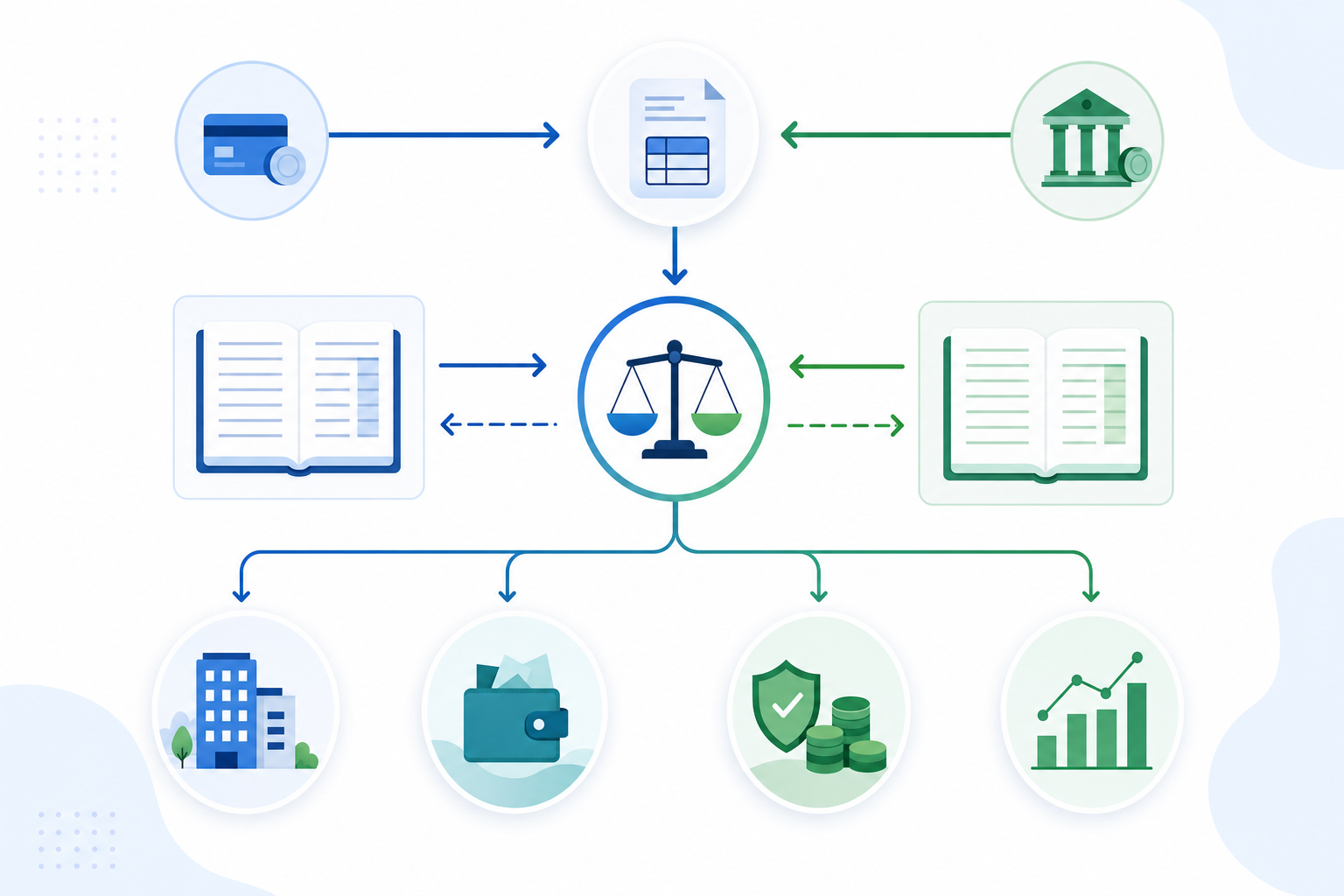
Puzzle connects natively to Stripe, Mercury, Ramp, and Gusto, converting incoming transactions into balanced general ledger entries automatically. AI processes 85–90% of categorization, applies revenue recognition policies to subscription transactions without manual intervention, and generates both cash and accrual entries simultaneously through dual-basis accounting.

You review and approve what matters. The routine work runs in the background. Real-time financials update daily, so you're never waiting for month-end to understand your burn rate, runway, or cash position. No spreadsheet schedules. No manual journal entries. Just accurate books, continuously.
Manual journal entry work steals founder time without adding strategic value. Your books need to be accurate, but you don't need to be the one categorizing every transaction by hand. AI can handle the repetitive parts while you review what matters and stay focused on revenue and product. When you're ready to see how automation works in practice, book a demo to walk through Puzzle's workflow.
Yes. Modern accounting software handles journal entry creation automatically as transactions flow in from your bank, payment processor, and other financial tools. You review and approve what matters, but you don't need to understand debit/credit mechanics to keep accurate books. The software applies those rules in the background.
Excel templates require manual data entry for every transaction and force you to apply debit/credit rules yourself, creating opportunities for errors and taking 10 to 15 hours monthly. Automated accounting software creates journal entries from your connected financial tools automatically, applying accounting rules correctly and cutting that time to minutes while reducing errors.
A simple journal entry affects two accounts: one debit, one credit. For example, paying a vendor means you debit Accounts Payable and credit Cash. A compound journal entry touches multiple accounts in one transaction, like payroll where you're recording gross wages, tax withholdings, and net pay simultaneously across several accounts.
Adjusting entries align revenue to the period when it was earned, not when cash arrived. For SaaS startups with subscription revenue, you'll record deferred revenue when a customer pays upfront, then recognize portions monthly as the service is delivered. Without these entries, your financial statements overstate revenue in early months and look wrong to investors.
Use reversing entries at the start of a new period to undo the prior month's adjusting entry and prevent double-counting. They're common when you've accrued an expense in one month that will be paid in the next. The reversal clears the accrual when the actual payment hits, keeping your books clean without manual tracking.