Startup Accounting
What Is a Ledger? Definition and Modern Accounting Examples (June 2026)
Learn what a ledger is in accounting, its definition, meaning, and see real examples. Updated guide for startups and businesses in April 2026.

4.8.26
Learn what a ledger is in accounting, its definition, meaning, and see real examples. Updated guide for startups and businesses in April 2026.
Most founders think accounting is something their bookkeeper handles. Then they need to calculate burn rate for a board meeting and realize their expense ledger in accounting is two weeks behind. The ledger is more than where transactions get filed after the fact. It's the only place you can see, in real time, how much cash you actually have, what you owe, and whether your revenue numbers are trending up or falling off a cliff.
TLDR:
A ledger is the master record of every financial transaction a business has ever made. Where a journal captures transactions as they happen in chronological order, the ledger organizes them by account type: cash, revenue, expenses, liabilities, and equity.
In accounting, the ledger is the backbone of your financial records. Every transaction flows through it. Without an accurate ledger, you can't produce reliable financial statements, know what you owe, or understand how your business is actually performing.
Some first-time founders confuse the two. A journal is the raw, chronological log of activity. The ledger takes that raw data and sorts it into named accounts so you can see, at a glance, how much cash you have, what revenue looks like month over month, or where expenses are climbing.
Think of it this way: if individual transactions are individual data points, the ledger is the structure that makes those data points readable and useful.
Every accounting ledger shares a set of structural elements that keep financial records accurate and traceable. Understanding these components helps you read any ledger, whether it's a handwritten journal from 1920 or a digital record in accounting software today.
Here are the building blocks you'll find in any standard ledger:
For an early-stage company, a missing date or vague narration can cost hours during an audit or investor due diligence review. Investors reviewing your books before a funding round expect clean, traceable records where every debit and credit ties back to something real.
Double-entry accounting is the system behind every ledger. Each transaction touches at least two accounts: one is debited, the other credited, and the totals must always match.

The governing equation is: Assets = Liabilities + Equity. Every entry moves accounts on both sides, keeping that equation in balance.
Here's what a double-entry transaction looks like in practice:
Account
Debit
Credit
Software Expense
$500
Cash
$500
Your startup paid $500 for software. Cash goes down; the expense goes up. Equal, opposite, balanced.
That balance requirement is what makes ledgers a reliable error-detection tool. If debits and credits don't balance at period end, something's wrong. Fraud is also harder to conceal because manipulating one account creates a visible imbalance elsewhere in the books, and that imbalance leaves a trail.
The general ledger is the master record. Every account your business uses lives here, and it serves as the single source of truth for producing financial statements.
Sub-ledgers sit beneath it, holding granular detail for specific account types, then rolling up into a summary entry in the general ledger called a controlling account.
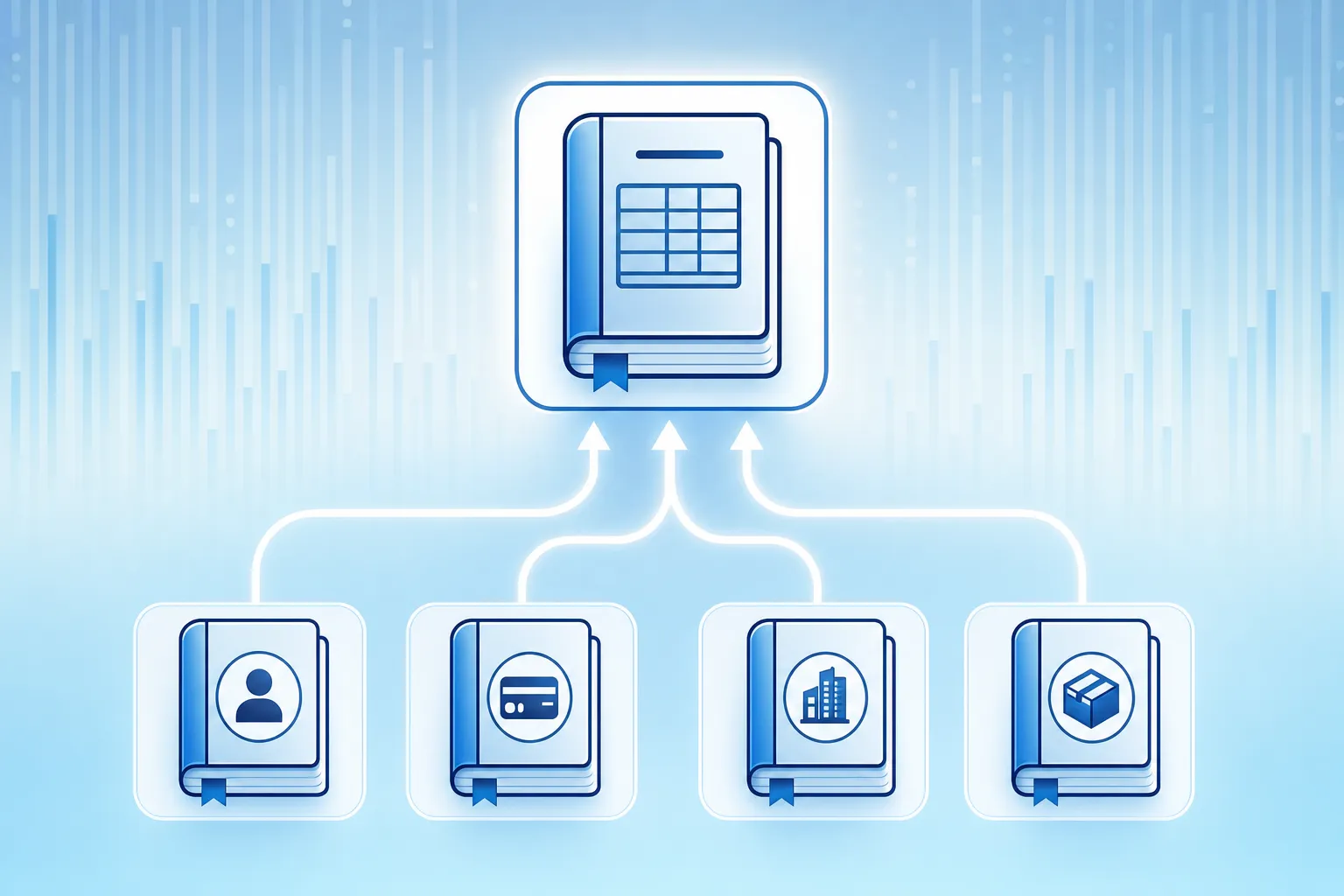
Common sub-ledgers include:
Early-stage startups often skip sub-ledgers entirely. By Series A, though, when you're managing hundreds of recurring subscriptions or multiple fixed assets, that extra detail becomes necessary. The general ledger shows the total; the sub-ledger explains it.
Transactions flow through two records before landing on a financial statement. The journal captures them first, in chronological order, with the date, affected accounts, and dollar amounts all in one entry. The ledger receives them second, through a process called posting, where each journal entry gets transferred into the corresponding account to build a running balance over time.
The journal preserves sequence. The ledger accumulates totals. Neither replaces the other, and a startup's books depend on both working together to trace any reported number back to its original source.
Your ledger balance is the total amount recorded in your bank account at the start of each business day, based on all transactions that have fully cleared and settled. It reflects deposits, withdrawals, and transfers that have been officially posted, but excludes pending transactions still in process.
These two figures often differ, which confuses many account holders.
Balance Type
What It Includes
Real-Time?
Ledger balance
Posted, fully settled transactions
No, prior day close
Available balance
Posted transactions minus holds and pending items
Yes
For example, if your ledger balance shows $5,000 but you have a $500 pending charge, your available balance would show $4,500.
Not always. Banks may place holds on recent deposits, meaning funds appear in your ledger balance before they are accessible. Always check your available balance before initiating a withdrawal to avoid overdraft fees.
Startups often think ledgers are something accountants worry about, not founders. But your ledger is where every financial decision leaves a trace.
Here are a few examples relevant to early-stage companies:
Most legacy accounting software only surfaces these ledger balances after the books are closed. For a startup watching runway shrink, waiting 30 days for that visibility is a real problem. Real-time ledger access means your burn rate reflects what actually happened this week, not last month.
The general ledger also goes by "books of final entry," "nominal ledger," or simply "account book." In crossword clues, "register" and "record" are common synonyms. Informally, a ledger can refer to any running financial log someone maintains.
A few other terms come up in day-to-day accounting conversations:
Sloppy ledger management compounds fast. A single miscategorized expense can distort your P&L, inflate your runway estimate, or trigger auditor questions that take hours to untangle. Getting your startup finances in order means making ledger accuracy a priority from day one.
Accurate ledgers matter because every financial statement you'll ever produce traces back to them. If an account is off by even a small amount, that error propagates through your balance sheet, income statement, and cash flow report simultaneously.
For startups, the stakes are higher than most founders realize:
Runway is where errors hurt most. If your expense ledger is behind by even two weeks, your burn rate calculation is wrong, and decisions made on that number carry real consequences.
The ledger structure hasn't changed in centuries. What has changed is who does the work of maintaining it. If you're comparing Puzzle.io competitors, remember that not all platforms automate ledger management with the same level of accuracy or real-time visibility.
AI-native accounting software (like Puzzle.io) automates the most time-consuming parts of ledger management: transaction categorization, account matching, and accuracy reviews. With AI processing up to 98% of transactions automatically, trained on the largest dedicated startup accounting training set, founders can see real-time ledger balances daily instead of waiting for month-end close.
The general ledger still sits at the core. AI removes the manual labor around it, freeing accountants to focus on analysis and strategy instead of data entry.
The ledger definition in accounting hasn't changed in centuries, but how you maintain one absolutely has. If you're still waiting weeks to close your books and calculate burn rate, you're flying blind during the most critical period. Modern AI can categorize transactions, balance accounts, and give you real-time visibility without the manual grunt work. Book a demo to see what AI-native ledger management on Puzzle can do for your startup.
Your ledger balance is the total posted to your account at the previous business day's close, including all settled transactions. Your available balance is what you can spend right now: your ledger balance minus pending charges, holds, and uncleared checks. Always check your available balance before withdrawing to avoid overdraft fees.
Yes. While double-entry accounting is what makes ledgers work—every transaction touching at least two accounts to keep Assets = Liabilities + Equity balanced—modern AI-native software automates that structure for you. You don't need to understand the mechanics to get accurate financials; the software maintains the ledger structure while you focus on running your business.
The general ledger is your master record containing every account your business uses and serving as the single source of truth for financial statements. Sub-ledgers hold granular detail for specific account types—like accounts receivable tracking individual customer invoices or fixed assets managing depreciation by item—then roll up into summary entries in the general ledger. Early-stage startups often skip sub-ledgers entirely until transaction volume requires that extra detail.
Legacy accounting software only surfaces ledger balances after month-end close, meaning you're making decisions on 30-day-old data. For startups watching runway shrink, that delay is dangerous. Real-time ledger access means your burn rate reflects what actually happened this week, not last month—giving you visibility to course correct before problems compound.
When debits and credits don't balance, something's wrong, and the double-entry system flags it automatically. That imbalance requirement is what makes ledgers reliable for error detection. Fraud is also harder to conceal because manipulating one account creates a visible imbalance elsewhere, leaving a traceable trail through your records.