An investor asks for trailing 12-month financials on accrual basis. You're tracking cash in a spreadsheet because that's what hits your bank account, but now you need to reconstruct when revenue was actually earned versus when it was paid. The difference between these two views of your income statement is the difference between seeing cash movement and understanding business performance. Startups raising capital need both, and most legacy tools make you pick one or manually maintain two sets of books.
TLDR:
An income statement is a financial report that tracks how much money your business earned and spent over a specific period, then tells you whether you came out ahead. Most founders know it as the P&L, short for profit and loss statement. Same document, two names.
The core formula is straightforward: revenue minus expenses equals net income (or net loss). That gap is what the statement exists to reveal.
Unlike a balance sheet, which captures a single point in time, an income statement covers a span of time. A month, a quarter, a full fiscal year. It's the document that answers the most basic question any founder should be asking: is this business actually making money?
Every income statement, regardless of format or industry, is built from three elements. Understanding each one individually makes reading any P&L far less intimidating.
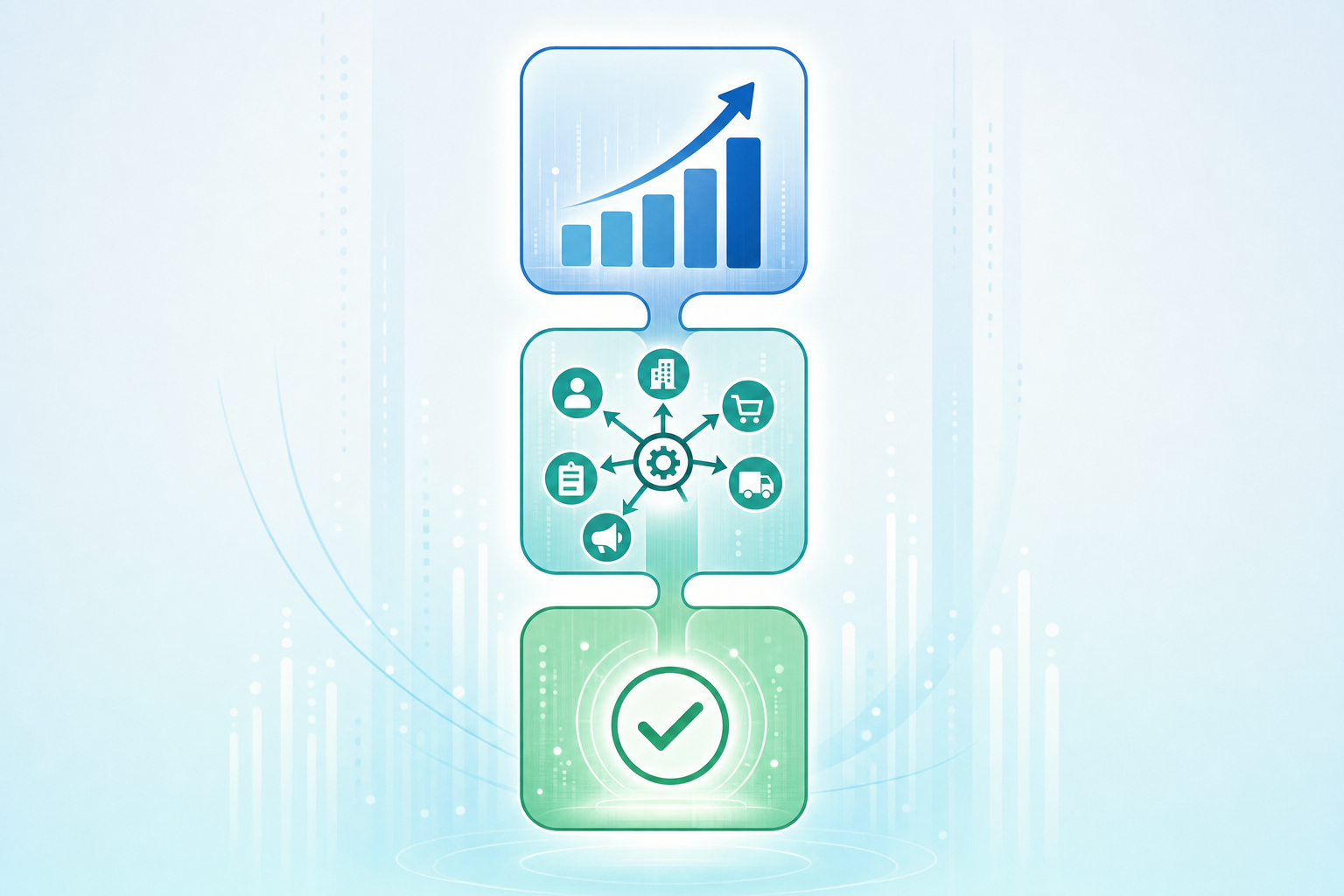
The money your business brings in from selling products or services. It sits at the top of the statement, which is why you'll hear it called "top-line revenue." For a SaaS startup, this is subscription fees. For a services business, it's billable work.
The costs of running the business: cost of goods sold (COGS), operating expenses, payroll, interest, and taxes. How these get grouped depends on which format you use, but all of them flow downward from revenue.
What remains after subtracting all expenses from revenue. Positive means profit. Negative means you're running at a loss. This bottom-line number is what investors and lenders watch closely, and it's the figure that flows into your equity section on the balance sheet.
The two formats differ in how much detail they show between top-line revenue and net income. GAAP provides presentation guidance for both approaches through ASC 205 and ASC 225.
Single-step is exactly what it sounds like: add all revenue together, subtract all expenses, arrive at net income. Clean and fast, it works well for early-stage companies without complex cost structures.
Multi-step breaks things into layers. Gross profit comes first (revenue minus cost of goods sold), then operating income (gross profit minus operating expenses), then net income after interest and taxes. Each subtotal tells a different part of the story about where money is being made or lost.
| Format | Structure | Best For |
|---|---|---|
| Single-step | All revenue minus all expenses | Early-stage, simple cost structures |
| Multi-step | Revenue → Gross Profit → Operating Income → Net Income | Fundraising, investor reporting, business analysis |
The UK FRC annual review of corporate reporting 2022 to 2023 found that 92% of FTSE 350 companies use the multi-step function-of-expense format. That preference grows naturally with complexity. For most startups, single-step gets you started; multi-step becomes worth the detail once you're tracking unit economics or reporting to investors.
Collecting payment and earning revenue are not always the same thing, and that distinction shapes everything on your income statement.
Revenue recognition is the rule that determines when a sale actually counts. Under standard accounting principles, revenue is recorded when goods are delivered or a service is performed, not when payment arrives. If a customer pays you $12,000 upfront for a year of software access, only one month counts as earned revenue right now. The rest is deferred until the service gets delivered.
Without this rule, a single large upfront payment could make your startup look far more profitable than it actually is. Revenue recognition keeps reported performance honest, which is why investors and auditors pay close attention to it.
The accounting method you choose determines when transactions appear on your income statement, beyond just how they look.
Cash basis records revenue when cash arrives and expenses when you pay them. A client who owes you $5,000 but hasn't paid yet doesn't exist on your books. It's simple, which is why many very small businesses start here, particularly those under certain revenue thresholds where bookkeeping complexity is low.
Accrual basis records transactions when earned or incurred, regardless of cash movement. Under GAAP, cash basis accounting is not acceptable for financial reporting purposes, and statements prepared on that basis are considered insufficient by most lenders. Publicly traded companies are prohibited from using it entirely.
For startups raising capital or presenting financials to investors, accrual is the expectation. It's the only method that captures the full picture of what you've earned and what you owe, which is exactly what any due diligence process requires.
The income statement answers "how did we perform?" The balance sheet answers "where do we stand right now?" Same company, two completely different lenses.
| Income Statement | Balance Sheet | |
|---|---|---|
| Question answered | Did we make money? | What do we own and owe? |
| Time frame | A period (month, quarter, year) | A single point in time |
| Key items | Revenue, expenses, net income | Assets, liabilities, equity |
They're also linked. Net income from your income statement flows directly into retained earnings on your balance sheet, connecting performance to financial position period over period. Neither statement tells the full story alone.
Three numbers tell most of the story on an income statement: gross profit, operating income, and net income. Founders who track these regularly can spot trouble before it compounds.

Two analysis methods unlock the most value from a few months of P&L data.
Horizontal analysis compares the same line items across periods. Month-over-month, you watch for direction: is COGS growing faster than revenue? Is one expense category spiking unexpectedly? Trends hide in the deltas, not the absolute numbers.
Vertical analysis converts each line to a percentage of revenue. COGS at 35%, marketing at 22%. That format makes benchmarking against industry norms straightforward and catches cost structure drift before it compounds into a real problem.
Together, both methods surface seasonality patterns and gaps between projections and actuals: two signals founders often miss when reading raw dollar figures alone.
The cadence and format you use should match who's reading and why.
Monthly P&Ls are the internal baseline. You need to catch burn problems early, not at quarter-end. A simple single-step format works fine here.
From there, stakeholder needs diverge:
Investors want depth and trend lines. Lenders want historical completeness. Your board wants the story behind the numbers. Build the format to match the audience, not the occasion.
Most founders don't have time to build P&Ls from scratch every month, so Puzzle automates the hard parts.
Our AI handles 85–90% of transaction categorization automatically, pulling data directly from Stripe, Mercury, Ramp, and Gusto without manual entry. Your income statement updates daily instead of sitting frozen until month-end. We also generate both cash and accrual P&Ls simultaneously, so you can monitor day-to-day cash flow while keeping accrual financials ready for investor diligence.
Burn rate, runway, and ARR/MRR sit alongside your traditional P&L components in one view. When a board meeting or fundraising round hits, investor-ready financials are already there.
Income statements answer the question every founder should be asking: is this business making money? The answer sits in the gap between your top-line revenue and your bottom-line net income, and everything in between tells you where the money goes. Reading your P&L regularly means you catch margin erosion, expense creep, and burn rate acceleration before they become crises. If you're building P&Ls manually each month, you're spending time on formatting instead of analysis. Book a demo to see how Puzzle generates both cash and accrual statements automatically so you can focus on what the numbers mean instead of how to calculate them.
The income statement shows performance over a period (month, quarter, year) by tracking revenue minus expenses to reveal profit or loss. The balance sheet captures what you own and owe at a single point in time through assets, liabilities, and equity. Net income from your P&L flows directly into retained earnings on your balance sheet, linking the two statements together.
Cash basis is not acceptable under GAAP for financial reporting, and most lenders won't accept statements prepared this way. For startups raising capital or presenting financials to investors, accrual basis is the expectation. It's the only method that captures the full picture of what you've earned and what you owe, which is exactly what any due diligence process requires.
Single-step works well for early-stage companies with simple cost structures: add all revenue, subtract all expenses, arrive at net income. Multi-step breaks performance into layers (gross profit, operating income, net income) and becomes worth the detail once you're tracking unit economics or reporting to investors. The UK FRC found that 92% of FTSE 350 companies use multi-step, and that preference grows naturally with complexity.
Monthly P&Ls are your internal baseline for catching burn spikes before they become real problems.
QuickBooks requires manual categorization and waits until month-end close for updated financials. Puzzle automates 85–90% of transaction categorization through AI, pulls data directly from Stripe, Mercury, Ramp, and Gusto, and updates your income statement daily instead of monthly. We also generate both cash and accrual P&Ls simultaneously, so you can monitor day-to-day cash flow while keeping accrual financials ready for investor diligence, with burn rate, runway, and ARR/MRR sitting alongside traditional P&L components in one view.