Most bookkeeping automation stops at pattern matching. You set a rule once, and it fires when conditions align. An AI bookkeeping agent works differently: it reads context, learns from corrections, and handles workflows that used to require a human at every step. That shift from static rules to adaptive reasoning is why reconciliation that once took two hours now runs in under five minutes for teams using a bookkeeping AI agent built right. The part people get wrong is assuming the agent replaces judgment calls entirely. It doesn't. It clears the volume work so your accountant can focus on the decisions software still can't make.
TLDR:
Rule-based automation follows fixed instructions: if a transaction matches a known pattern, it gets a category. AI bookkeeping agents work differently. They reason across context, learn from accumulated decisions, and can run multi-step workflows without a prompt at each step.
The architectural gap matters. A rule fires when conditions match exactly. An agent infers from incomplete or inconsistent data, recognizes when the same vendor appears under several names, and flags when a transaction breaks from its normal pattern. Continuous learning is what separates them from rule engines: every finalized decision teaches the agent, so accuracy compounds over time instead of plateauing once rules are set. Stanford research found that accounting firms using generative AI saw a 12% rise in reporting granularity, meaning the AI made more detailed record-keeping possible without adding human work.
Two of the most time-consuming bookkeeping tasks for any startup are categorizing transactions and matching bank accounts. An AI bookkeeping agent handles both by reading raw bank feeds and applying learned categorization rules across hundreds or thousands of transactions at once.
The agent reads each transaction's description, amount, counterparty, and timing, then maps it to the correct account in your chart of accounts. Over time, it learns from corrections made by your accountant, so its accuracy improves with every month of data.
Reconciliation is where many AI agents still need a human checkpoint. The agent will match transactions to your general ledger automatically, but edge cases such as split transactions, duplicate charges, or timing mismatches typically get flagged for human review instead of auto-resolved. That checkpoint is a feature, not a gap: it keeps an accountant in the loop before anything is finalized.
Accounts payable is one of the highest-volume, most repetitive workflows in bookkeeping, which makes it a natural fit for AI agents. Research on AP automation adoption found that 79% of CFOs cite digitization of finance processes as their top priority, yet 75% of companies still use paper checks despite the high costs.
When an invoice arrives, an AI bookkeeping agent can extract the vendor name, amount, due date, and line items, match it against the corresponding purchase order, flag duplicates or mismatches, and route it for approval without a human touching it first. Tools like Dext specialize in this layer: Dext captures receipts and bills from email, photos, or supplier portals and pushes structured data directly into the general ledger.
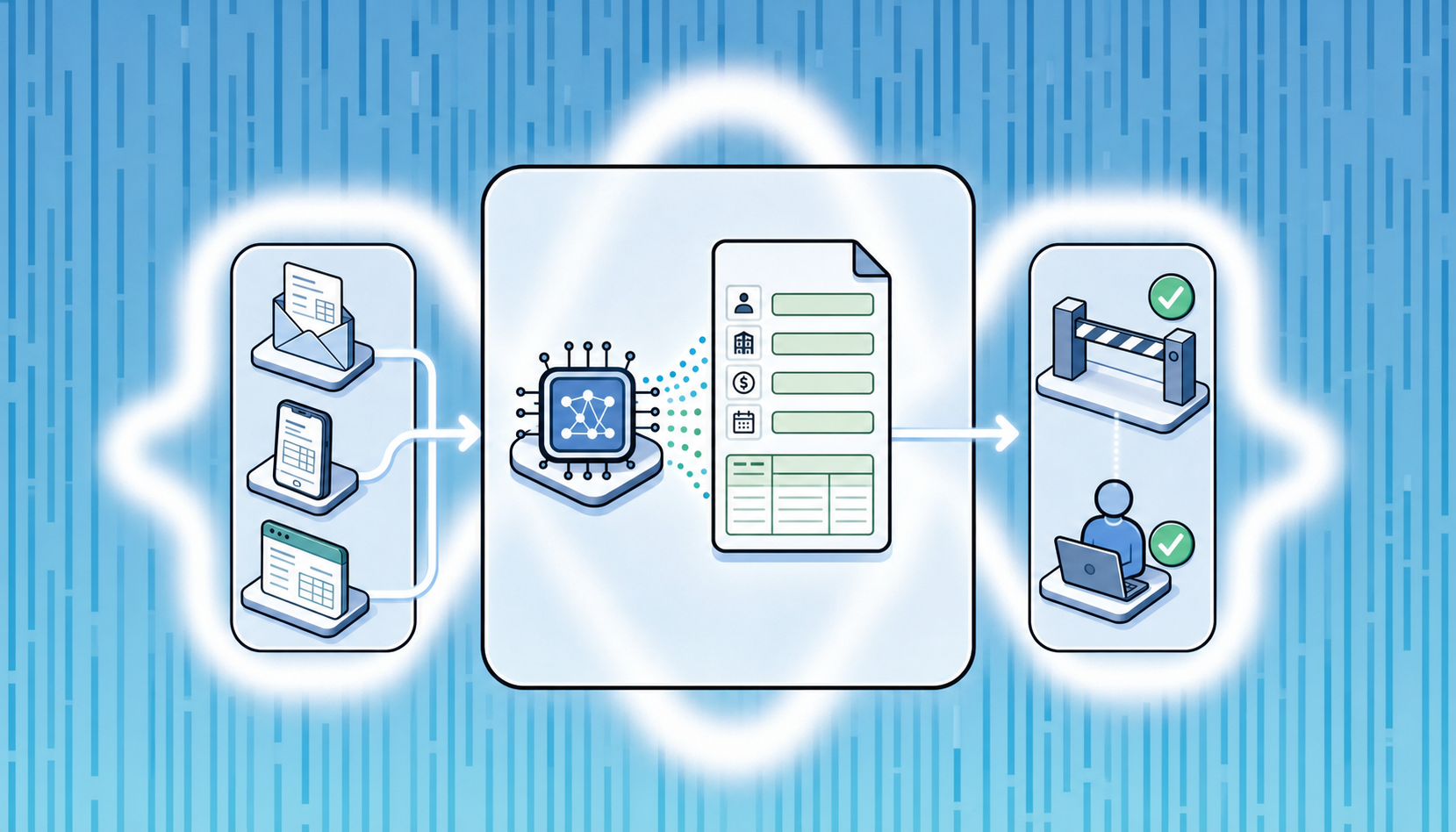
The extraction and matching steps are well-suited to automation. The judgment calls are not:
AI agents reduce the time your team spends on invoice intake, but they work best when a human reviews exceptions before payments are released. The cost of an uncaught error in AP is real: duplicate payments, fraud exposure, and strained vendor relationships.
The month-end close is where bookkeeping pain concentrates. Receipts pile up, transactions sit uncategorized, and reconciliation turns into a multi-hour hunt for a few dollars of discrepancy.
AI bookkeeping agents cut directly into that bottleneck. They match transactions to rules continuously, so by the time close arrives, most of the work is already done. Reconciliation that typically takes two hours can run in under five minutes.

Judgment calls don't disappear. Accruals tied to contract terms, revenue recognition on multi-deliverable deals, and any transaction that breaks a pattern still need a trained eye. The agent flags anomalies; the accountant decides what they mean. That review step is what keeps the books audit-ready and catches errors before they compound across quarters.
AI bookkeeping agents handle cash transactions well, but revenue recognition and accrual accounting expose their limits fast.
When a SaaS startup invoices a customer for an annual subscription, the cash hits the account on day one. The earned revenue, though, gets spread across 12 months. An AI agent scanning bank feeds sees the deposit. It has no way to know how much of that deposit belongs to this month's income statement without rules, context, or a human telling it so.
The same gap shows up with accruals: expenses incurred in one period but paid in another require judgment calls that go beyond pattern matching on transactions.
AI bookkeeping agents can flag invoices that look like deferred revenue and route them for review. That's genuinely useful. But the actual recognition schedule, the journal entries that spread revenue across periods, and the decisions about when a performance obligation is satisfied all require accounting judgment.
The accountant's role here goes beyond oversight. It's authorship: setting the rules the agent will follow. Without that, automated accrual entries are guesses dressed up as entries.
Every AI bookkeeping agent produces a log of what it did and why, and that audit trail is where compliance either holds together or falls apart.
The log matters because tax authorities and auditors don't just want the number; they want to see how you arrived at it. An agent that categorizes a transaction but leaves no reasoning behind it creates a gap that a human accountant then has to fill manually, often under deadline pressure.
Where humans still win here is judgment under ambiguity. An AI agent can flag that a vendor payment doesn't match any known category, but deciding whether it's a capital expense, a prepaid asset, or an operating cost requires contextual knowledge about the business that the agent simply doesn't have. A trained accountant catches those edge cases before they compound.
Accuracy reviews follow the same pattern:
The compliance layer also varies by entity type, jurisdiction, and stage. A seed-stage startup has different audit exposure than a Series B company preparing for due diligence. No AI bookkeeping agent calibrates that risk automatically; an accountant does.
AI agents handle high-volume, rules-based work well. But bookkeeping is not always high-volume and rules-based. Some transactions require judgment that current AI genuinely struggles with.
| Bookkeeping Task | What AI Agents Handle | What Requires Human Judgment |
|---|---|---|
| Transaction Categorization | Pattern matching, vendor recognition, routine coding across hundreds of transactions | New vendor types, split transactions across cost centers, unusual one-time expenses |
| Bank Reconciliation | Matching transactions to GL automatically, flagging duplicates and timing mismatches | Resolving split transactions, duplicate charges, timing discrepancies before finalization |
| Accounts Payable | Invoice data extraction, PO matching, duplicate detection, approval routing | Disputed invoices, payments near cash thresholds, fraud detection (vendor banking changes) |
| Revenue Recognition | Flagging deferred revenue candidates, drafting initial journal entry structures | Multi-element contract interpretation, performance obligation determination, recognition schedules |
| Accrual Accounting | Applying recognition schedules once defined, posting recurring accruals on schedule | Setting accrual rules, expenses spanning periods, contract term interpretation |
| Month-End Close | Continuous categorization, automated reconciliation, recurring entry posting | Accruals tied to contracts, pattern-breaking transactions, final sign-off before posting |
| Audit & Compliance | Volume error detection (duplicates, transposed digits, missing receipts) | Context-specific errors, chart of accounts exceptions, risk calibration by entity stage |
When an AI agent makes a confident error, it tends to make it consistently. A miscategorized vendor gets miscategorized every month until a human catches it. That compounding effect means errors in complex areas go beyond annoying: they quietly distort your financials over time.
This is why the firms and startups getting the most value from AI bookkeeping agents are pairing agent speed with human review checkpoints, not replacing review entirely. The agent handles volume; the accountant handles judgment calls and catches the edge cases before they compound.
Bookkeeping AI agents handle the transactional layer well, but accountants still own everything that requires judgment, trust, and context.
Client relationships are built on communication, not categorization. When a founder is deciding whether to raise a bridge round or push toward profitability, they call their accountant, not their software. That kind of conversation requires knowing the business, understanding the founder's risk tolerance, and reading between the lines of the numbers.
Advisory work falls into the same category. Tax planning, entity structure decisions, and fundraising prep all depend on interpretation and experience that no AI agent replicates today.
The AI handles the inputs so accountants can spend more time on these outputs. That trade is the actual value: fewer hours on data entry means more hours available for the work clients actually pay a premium for.
AI catches a lot, but catching everything is a different story. Reconciliation mismatches, duplicate entries, miscategorized transactions: these are table stakes for any bookkeeping AI agent worth using. The harder problems sit one layer up.
Judgment calls don't have a clean rule to follow. When a vendor payment spans two cost centers, when a refund needs to be split across periods, when a new expense type appears that the AI has never seen before: these are the moments where human review isn't a formality. It's the actual work.
There's also the audit trail to consider. Errors that get approved and posted are far more costly to unwind than errors caught in a draft state. A human sign-off step before anything touches the general ledger keeps that risk contained.
In practice, the approval gate handles a few distinct categories:
The AI does the heavy lifting. The human decides what gets posted. That sequence is what keeps AI-assisted books audit-ready.
Puzzle's AI Close product is built around a simple division of labor: AI agents handle the repetitive execution work, and accountants own the rules, review the output, and sign off before anything is final.
When a firm sets up a client in Puzzle, they configure the logic once. Which transactions auto-categorize, which vendors map to which accounts, what thresholds trigger a flag for human review. After that, the agents run on schedule, and the accountant steps in only where judgment is needed.
This keeps firms in control without requiring them to do the grunt work every month.
The result is a close process where AI handles volume, accountants handle expertise. Neither replaces the other.
AI bookkeeping agents work best when they handle the grunt work and accountants handle everything that requires expertise. The agent categorizes transactions, runs reconciliation, and flags anomalies. Your accountant reviews the output, signs off on anything material or ambiguous, and owns the advisory layer that clients actually pay a premium for. That's the workflow that cuts close time without introducing audit risk. Book a demo to see how Puzzle structures that division of labor with your data.
Yes. AI bookkeeping agents handle high-volume categorization and reconciliation work, but they still require human review and approval before transactions finalize. Your accountant stays in control of judgment calls, accrual decisions, and strategic work while spending less time on data entry.
Traditional automation fires when conditions match exactly. AI agents infer from incomplete data, recognize vendor name variations, flag pattern breaks, and learn from every correction. The difference is continuous learning: AI accuracy compounds over time instead of plateauing once rules are set.
AI agents can run transaction categorization throughout the month, match bank feeds for reconciliation automatically, and post recurring entries on schedule without manual triggers. That cuts close time materially. But accruals tied to contract terms, revenue recognition on multi-deliverable deals, and any transaction outside known patterns still need an accountant to review before they're finalized.
When a SaaS startup invoices an annual subscription, the agent sees the deposit but has no way to know how much belongs on this month's income statement without rules or context. AI agents can flag invoices that likely need deferred revenue treatment and draft initial journal entry structures, but the accountant sets the recognition schedule and defines when performance obligations are satisfied.
Every agent logs what it did and why, but the quality of that audit trail varies. Tax authorities want to see how you arrived at a number, beyond the number itself. AI agents catch volume errors well (duplicates, transposed digits, missing receipts), but humans catch the quieter errors: transactions coded correctly by rule but wrong for this client's chart of accounts, or patterns that signal deeper policy issues. The strongest setups treat AI output as a first draft with human sign-off before close.