Vertical SaaS startups play by different rules than horizontal software companies. Their revenue models blend subscriptions with embedded payments, industry-specific compliance fees, and usage-based pricing. That complexity shows up fast on the books. If you're a founder or finance lead at a vertical SaaS company, you already know generic accounting advice falls short. The same goes for accounting firms serving these clients. You need a framework built for the specific financial realities of industry-focused software businesses.
This guide to accounting for vertical SaaS startups covers the unique challenges, chart of accounts setup, tax considerations, and software criteria that matter most. Whether you're pre-revenue or scaling past Series A, the principles here will keep your finances clean and your decisions sharp. We've built this from years of working with SaaS companies that serve healthcare, construction, logistics, real estate, and other verticals where the accounting gets complicated quickly. Treat this as your reference point, not a one-time read.
Accounting for vertical SaaS startups means tracking revenue from multiple monetization layers, not just subscriptions. Most vertical SaaS companies earn from a mix of recurring software fees, transaction-based payments processing, implementation services, and compliance or data fees specific to their target industry.
Here are the three most important things to know:
The bottom line: vertical SaaS accounting isn't just SaaS accounting with a different label. It's a distinct discipline that reflects how these businesses actually make and spend money.
From an accounting firm's perspective, your clients in vertical SaaS present challenges you won't see in a typical B2B software company. The first major difference is revenue composition. A horizontal SaaS company usually has one revenue stream: subscriptions. Your vertical SaaS clients likely have three to five. They're bundling software with payments, marketplace transactions, data services, and professional services. Each stream has its own recognition timing and gross-vs-net considerations under ASC 606.
The second difference is customer concentration risk. Vertical SaaS companies serve narrow industries, which means a smaller total addressable market and often higher revenue per customer. Losing one enterprise client can shift the financial picture dramatically. Your accounting needs to reflect this through careful accounts receivable aging and contract liability tracking.
Third, regulatory overhead varies wildly by vertical. A SaaS company serving cannabis dispensaries faces different compliance costs than one serving dental practices. These aren't generic expenses. They require specific categorization so that founders, investors, and lenders can see the true cost structure. Treating them as miscellaneous overhead is a mistake that distorts margins and misleads stakeholders.
Your chart of accounts should mirror how your business actually operates, not how a generic template suggests. For vertical SaaS, that means creating separate revenue accounts for each monetization layer. A single "Revenue" line won't cut it. You need distinct accounts for subscription revenue, payments processing revenue, implementation and onboarding fees, and any transaction-based or usage-based income. This separation is essential for vertical SaaS startups that want clean reporting for board decks and fundraising.
On the expense side, break out cost of revenue by stream. Payments processing has interchange and network fees. Subscription delivery has hosting and infrastructure costs. Implementation has labor costs that differ from your core engineering team. Lumping these together makes your gross margin meaningless. You'll also want dedicated accounts for industry-specific compliance costs, vertical-focused sales and marketing, and capitalized software development.
Here are five accounts commonly added for vertical SaaS:
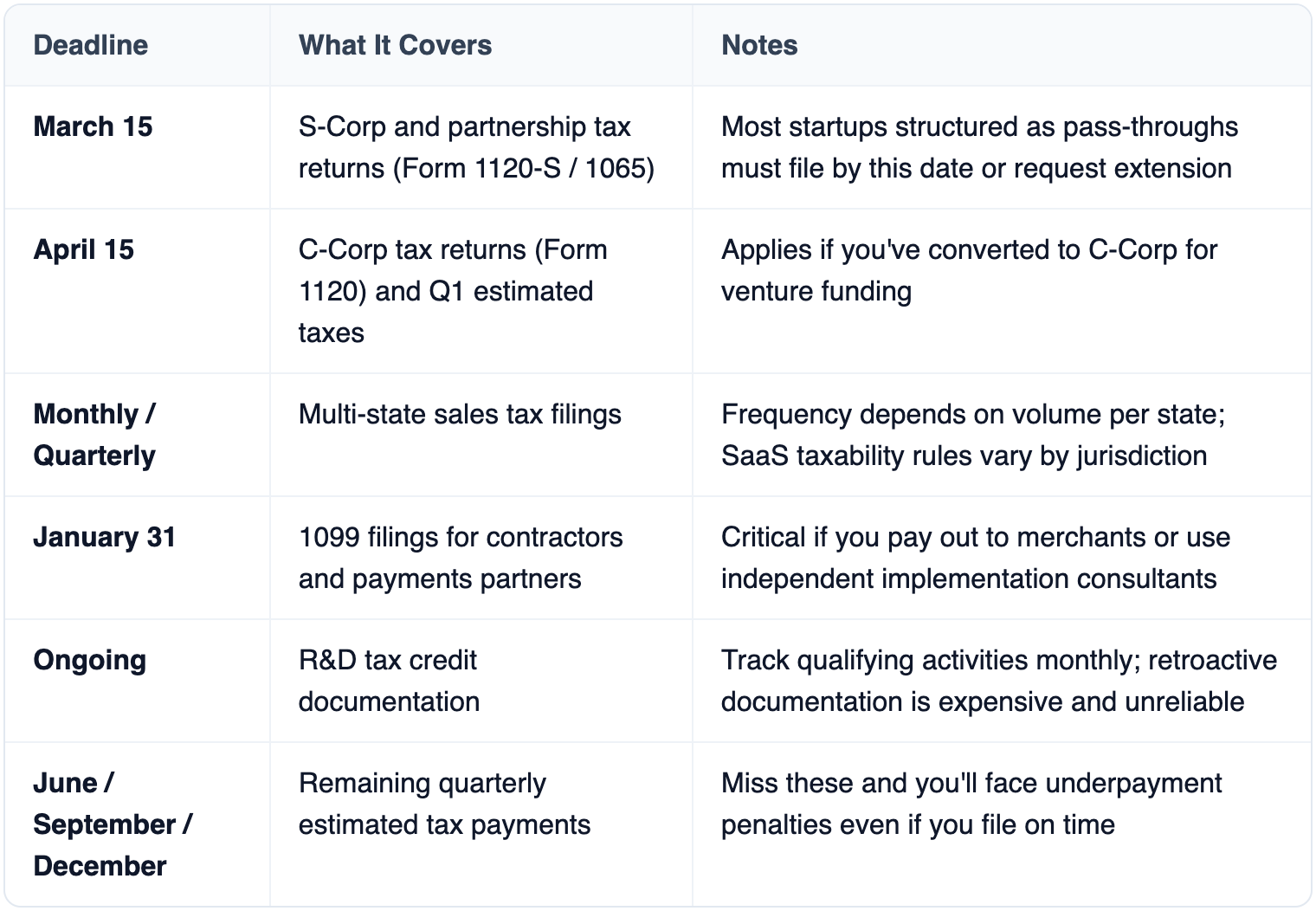
Vertical SaaS companies face tax complexity that goes beyond standard startup obligations. If you're processing payments or operating across state lines, you're likely triggering nexus in multiple jurisdictions. Sales tax on SaaS varies by state, and some states treat bundled SaaS-plus-payments differently than standalone software subscriptions.
Choosing the right accounting software depends on your revenue model's complexity, not your company size. Look for tools that match how vertical SaaS businesses actually operate.
Do vertical SaaS startups need a specialized accountant? Yes. A generalist CPA can handle basic bookkeeping, but vertical SaaS revenue recognition, embedded payments accounting, and industry-specific compliance require someone who understands SaaS metrics and ASC 606. Look for an accounting firm with direct experience serving SaaS companies that have multiple revenue streams.
How should a seed-stage vertical SaaS startup set up its books? Start with a chart of accounts that separates your revenue streams from day one. Even if payments revenue is small at seed stage, building the structure early avoids painful reclassifications later. Use accrual-basis accounting, track deferred revenue properly, and keep your cap table clean. These basics save tens of thousands in cleanup costs before Series A due diligence.
Should we report payments revenue gross or net? It depends on your role in the transaction. If you control the service, set pricing, and bear inventory or credit risk, you're likely the principal and report gross. If you're facilitating a transaction between the merchant and their customer, you're the agent and report net. The difference can be massive on your income statement, so get this right with your auditor early.
What SaaS metrics should our accounting support? Your books should produce clean data for ARR, net revenue retention, gross margin by revenue stream, CAC payback period, and LTV. If your accounting can't generate these numbers without a week of spreadsheet work, your system needs an upgrade. Investors in 2026 expect real-time or near-real-time access to these metrics.
When should we bring in a fractional CFO vs. a full-time hire? A fractional CFO makes sense from seed through early Series A, especially if your revenue model is complex. They'll set up your financial infrastructure, handle investor reporting, and guide your first audit. Once you're past $5M ARR and preparing for Series B, a full-time CFO becomes worth the investment because the strategic finance work becomes a daily job, not a monthly one.
Getting accounting right early is one of the highest-ROI decisions a vertical SaaS founder can make. Messy books don't just create tax headaches. They slow down fundraising, obscure your real unit economics, and make it harder to price your product correctly.
Start with a chart of accounts that reflects your actual business model. Hire or partner with an accounting firm that understands SaaS revenue recognition and embedded fintech. Pick software that automates the hard parts, especially multi-stream revenue allocation and payments reconciliation. And revisit your setup every time your business model evolves, because vertical SaaS companies tend to add new revenue streams faster than most.
This guide to accounting for vertical SaaS companies is a starting point, not a finish line. The companies that treat their financial infrastructure as a competitive advantage, not a back-office chore, are the ones that scale with confidence. If your books can't tell you exactly where your margins come from today, it's time to fix that before your next board meeting.