Most SaaS founders don't think about accounting until something breaks. Maybe it's a botched revenue report before a fundraise. Maybe it's a surprise sales tax notice from a state you forgot you had customers in. Either way, the pain is real and avoidable. Subscription-based businesses carry unique financial complexity that generic accounting advice simply doesn't address. If you're building a SaaS company, you need an accounting framework designed for recurring revenue, deferred income, and the metrics investors actually care about. Think of this as your go-to guide for SaaS startup accounting: the principles, the pitfalls, and the practical steps that keep your books clean and your business fundable.
SaaS accounting is the practice of tracking, recognizing, and reporting revenue and expenses for subscription-based software companies. It matters because SaaS revenue recognition rules differ significantly from traditional businesses, and getting them wrong can torpedo fundraising, trigger compliance issues, or misrepresent your company's health.
Here are the three most important things to know:
Even if you read nothing else, those three points will keep you out of the most common traps.
SaaS companies don't sell a product and move on. They sell ongoing access, which means revenue arrives in recurring streams tied to service delivery periods. This single fact reshapes nearly every accounting decision your clients in this space will face. A traditional retailer records revenue at the point of sale. A SaaS company selling a $12,000 annual plan records $1,000 per month over twelve months. The remaining balance sits on the balance sheet as deferred revenue, a liability, until it's earned.
The second major difference is the cost structure. SaaS startups spend heavily upfront on customer acquisition, server infrastructure, and product development. These costs don't align neatly with the revenue they generate. Matching expenses to the periods they benefit requires careful treatment of capitalized development costs, amortized sales commissions (under ASC 340-40), and hosting expenses that scale with usage. For accounting firms serving SaaS clients, understanding this timing mismatch between cash flow and recognized revenue is essential. It's the foundation everything else rests on.
A standard chart of accounts won't capture the financial realities of a subscription business. SaaS startups need accounts that reflect recurring revenue streams, deferred income, and the distinct cost categories that investors and auditors expect to see. Your revenue section should separate MRR from professional services, implementation fees, and usage-based overages. On the expense side, you'll want clear distinctions between cost of revenue (hosting, customer support, DevOps) and operating expenses (sales, marketing, G&A). Naming conventions matter too. Labeling an account "Software Costs" tells you nothing. "AWS Hosting - Production" or "Third-Party API Fees" gives you real visibility.
Here are five accounts commonly added for SaaS companies:
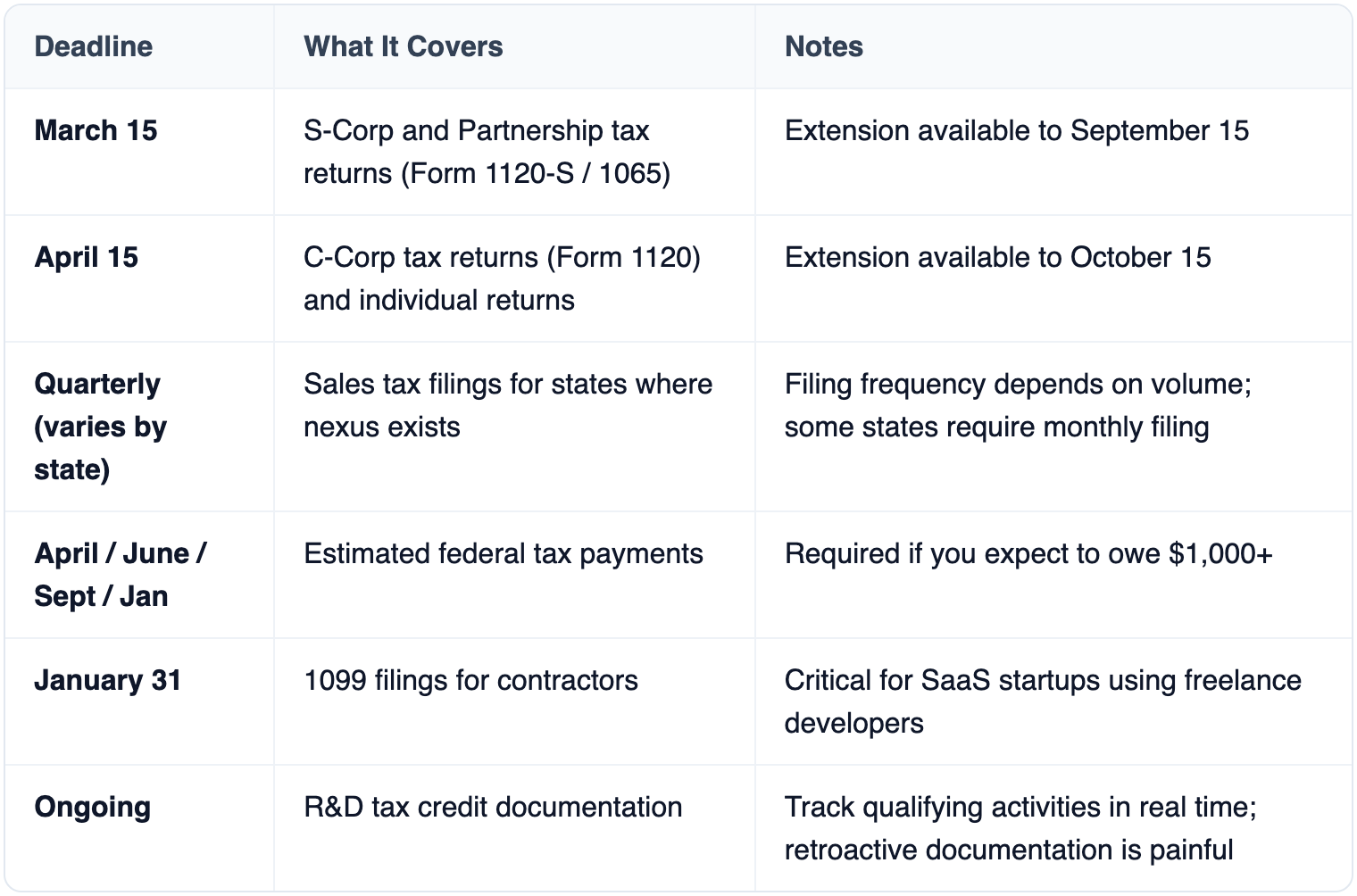
SaaS companies face a tax environment that shifts depending on where customers are located, not just where the company is headquartered. Remote sales tax obligations triggered by economic nexus laws mean your filing calendar can grow quickly as revenue scales. R&D tax credits also deserve attention: most SaaS startups qualify, yet many leave this money on the table.
The right accounting software should fit your business model, not force you to work around limitations. Here's what to prioritize:
Do SaaS startups need to follow ASC 606?
Yes. ASC 606 applies to all companies that enter into contracts with customers, regardless of size. Even pre-revenue startups should set up compliant revenue recognition processes from the start. Fixing non-compliant books retroactively during a Series A audit is costly and delays deals.
Should a seed-stage SaaS startup hire a bookkeeper or an accounting firm?
At the seed stage, a specialized accounting firm is usually the better choice. A generalist bookkeeper may not understand deferred revenue, capitalized software costs, or SaaS-specific tax considerations. An accounting firm with SaaS experience sets up your chart of accounts correctly and builds processes that scale with you.
What's the difference between MRR and recognized revenue?
MRR (Monthly Recurring Revenue) is an operating metric. It reflects the normalized monthly value of all active subscriptions. Recognized revenue is the GAAP-compliant figure that appears on your income statement. They often align for monthly plans, but diverge significantly with annual or multi-year contracts, discounts, and usage-based components.
How do SaaS startups handle R&D tax credits?
Most SaaS startups qualify for federal and state R&D tax credits for activities like developing new features, improving algorithms, or building internal tools. Startups with less than $5 million in gross receipts can apply the credit against payroll taxes, which is valuable for pre-profit companies. Track developer hours and project descriptions throughout the year, not just at tax time.
When should a SaaS startup switch from cash to accrual accounting?
The sooner the better, but it becomes mandatory once you're pursuing institutional funding. Investors and auditors require accrual-based financials. If you're past $500K in ARR or approaching a Series A, you should already be on accrual. The transition gets harder and more expensive the longer you wait.
Getting your accounting right early is one of the highest-ROI decisions a SaaS founder can make. The companies that struggle during fundraising, M&A due diligence, or tax season are almost always the ones that treated accounting as an afterthought in their first two years. You don't need a massive finance team on day one. You need the right structure: a SaaS-appropriate chart of accounts, compliant revenue recognition, clean sales tax tracking, and software that actually fits subscription businesses. Whether you handle this in-house or partner with a firm that specializes in SaaS, the goal is the same. Build a financial foundation that gives you accurate numbers today and holds up under scrutiny tomorrow. Start now. Your future CFO will thank you.