Running a mobile app startup means juggling code sprints, user acquisition, and investor expectations, often all at once. Accounting rarely tops the priority list, but it should. Poor financial management kills more startups than bad products do. Whether you're bootstrapping a utility app or burning through Series A funding on a social platform, your books need to reflect the unusual way mobile app companies earn, spend, and grow. This guide to accounting for mobile app startups covers the specific financial practices that separate thriving companies from those that flame out before their second year. We've worked with dozens of app-stage companies, and the patterns are clear: founders who treat accounting as a strategic function, not a chore, make better decisions faster. The advice here is built for founders, CFOs, and the accounting professionals who serve them.
Accounting for mobile app startups is the practice of tracking revenue, expenses, and tax obligations specific to software businesses that distribute products through app stores. It matters because mobile apps have unusual revenue recognition patterns, high upfront development costs, and multi-jurisdiction tax exposure.
Here are the three most important things to know:
Get these three right and you've handled roughly 80% of what makes mobile app accounting distinct.
Your clients in the mobile app space don't operate like traditional product companies. Their revenue doesn't arrive in clean invoices. Instead, it flows through intermediaries: Apple's App Store, Google Play, and sometimes third-party payment processors for web-based upgrades. Each platform has its own reporting cycle, fee structure, and payout schedule. Reconciling these deposits against actual user transactions requires a level of detail that most small business accounting workflows aren't built for.
The cost structure is also unusual. A mobile app startup's biggest asset is often its codebase, but that asset doesn't sit on a shelf. It requires continuous updates, bug fixes, and feature releases. Distinguishing between costs that maintain existing functionality (expensed) and costs that add genuinely new capability (potentially capitalized) demands judgment calls that recur every sprint cycle. This is not a one-time classification exercise.
Then there's the subscription model. Most successful apps in 2026 run on recurring revenue. That means deferred revenue accounting, churn tracking, and metrics like MRR and ARR become central to the financial story. Your clients' investors will scrutinize these numbers closely, so the accounting has to support them cleanly.
A standard chart of accounts won't capture the financial reality of a mobile app business. You need accounts that reflect how revenue actually arrives and how costs actually behave. Platform fees deserve their own contra-revenue account rather than being buried in general expenses. Development costs need separate accounts for the preliminary, application development, and post-implementation stages so you can capitalize correctly under ASC 350-40. Server and cloud hosting costs, which often scale directly with user growth, should be broken out from general operating expenses. And if your app uses a subscription model, you'll want a deferred revenue liability account that tracks unearned portions of annual or multi-month plans.
Here are five accounts commonly added for mobile app startups:
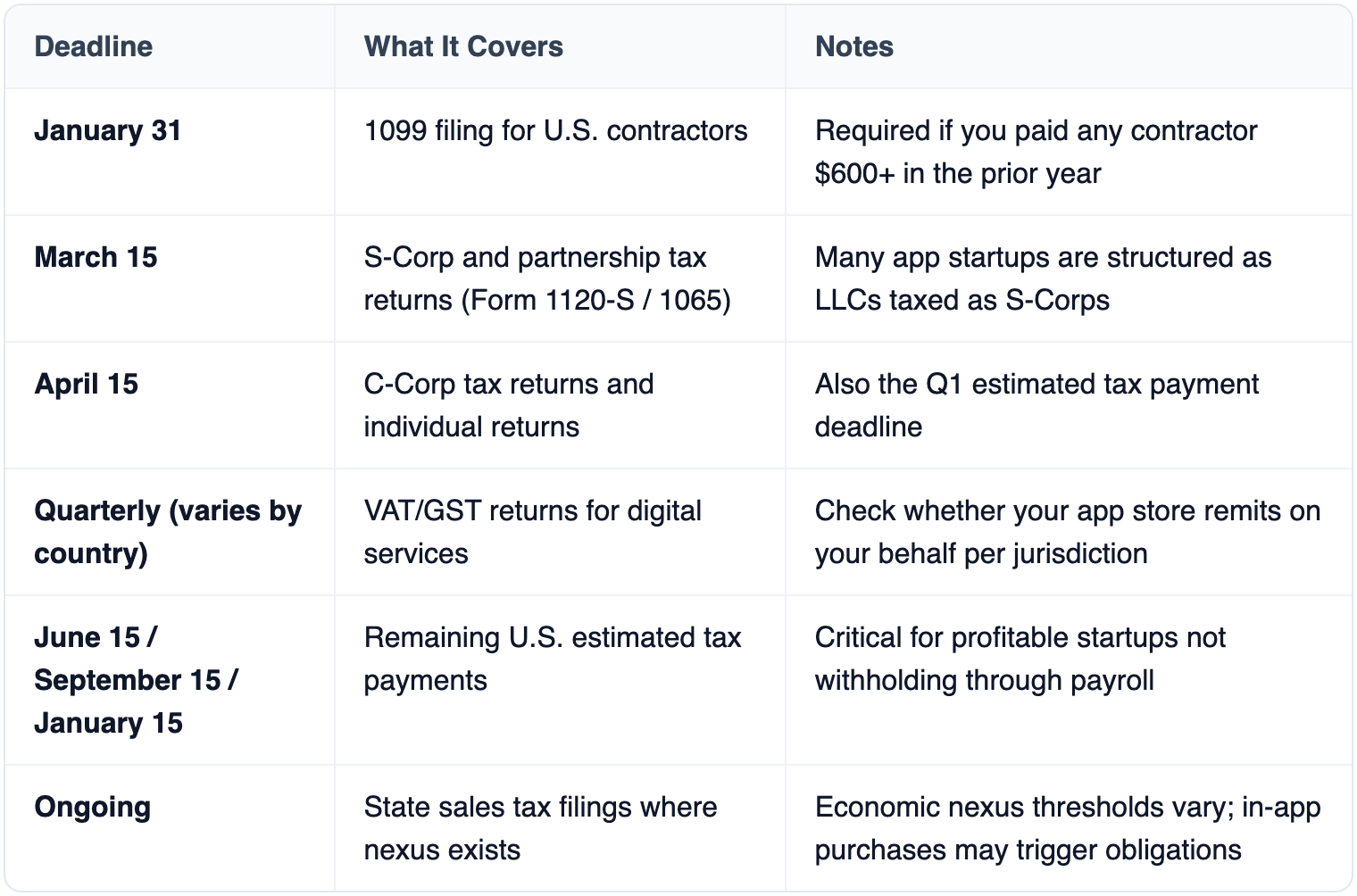
Mobile app startups face a unique tax situation because their products cross borders instantly. A user in Germany downloading your app triggers potential VAT obligations, even if your company is based in Austin. App stores handle collection in many countries, but not all, and the rules keep shifting. Staying on top of digital services taxes across the EU, UK, Canada, Australia, and Southeast Asia is essential for any app startup with international users.
Choosing the right accounting platform matters more than most founders realize. Here's what to prioritize:
Do I need a specialized accountant for my mobile app startup?
Yes, and the earlier the better. General accountants often mishandle software capitalization, app store revenue reconciliation, and international tax obligations. Look for a firm or CPA with direct experience serving SaaS or mobile app companies. They'll set up your chart of accounts correctly from day one and save you expensive cleanup later.
Should I capitalize my app development costs?
It depends on the stage. Under ASC 350-40, costs incurred during the preliminary project stage are expensed. Once you move into application development, where actual coding and testing happen, those costs can be capitalized. Post-launch maintenance and minor updates are expensed again. The key is documenting which stage each sprint falls into.
How does revenue recognition work for in-app subscriptions?
You recognize subscription revenue ratably over the subscription period. If a user pays $60 for a 12-month plan, you record $5 per month as earned revenue and carry the rest as deferred revenue. This applies regardless of when the cash hits your bank account.
What changes at Series A that affects my accounting?
Investor expectations jump significantly. Series A investors want GAAP-compliant financials, clean capitalization tables, and reliable monthly reporting. They'll scrutinize your unit economics: CAC, LTV, and gross margin. If your books are messy, due diligence stalls or kills the deal entirely. Start cleaning up your accounting at least two quarters before you plan to raise.
Do app stores handle all my sales tax obligations?
Not entirely. Apple and Google collect and remit sales tax, VAT, and GST in many jurisdictions, but coverage isn't universal. Some U.S. states and international markets still require the developer to register, file, and remit independently. Review each platform's tax documentation annually and consult a tax advisor familiar with digital goods.
The accounting practices you establish in your first year shape every financial decision that follows. Mobile app startups that treat their books as an afterthought end up scrambling before fundraises, misreporting revenue to investors, or missing tax obligations that trigger penalties. None of that is inevitable.
Start with a proper chart of accounts. Get your revenue recognition right from the first subscription sale. Track development costs by project stage so capitalization decisions are clean. And find an accounting partner who actually understands how app store economics work.
Your app's code is an asset. Your financial data should be treated the same way. Build it with care, maintain it consistently, and it'll serve you well through every stage of growth, from pre-seed through IPO. The startups that get accounting right early don't just survive audits. They make smarter decisions, raise capital faster, and scale with confidence.