Running a gaming startup is exciting, chaotic, and full of financial surprises. Between platform royalties, in-app purchase revenue, and international digital sales tax, your books can get messy fast. Most general accounting advice doesn't account for the quirks of this industry, and that's where founders get tripped up. Whether you're bootstrapping an indie studio or scaling after a seed round, getting your accounting right from day one saves you real money and real headaches. This guide to accounting for gaming startups covers the essentials: what's different, what's hard, and what you need to prioritize before your next funding milestone.
Accounting for gaming startups means tracking revenue, expenses, and tax obligations specific to the interactive entertainment industry. It matters because gaming companies have unusual revenue models, high upfront development costs, and complex multi-jurisdiction tax exposure.
Here are the three most important things to know:
Even if you read nothing else, nail these three areas. They're where gaming startups most frequently stumble during audits, tax filings, and due diligence.
Your clients in the gaming space don't operate like a typical SaaS company or retail business. The first major difference is the revenue model. A single game might generate income from six or more distinct streams: premium sales, microtransactions, battle passes, advertising, licensing, and merchandise. Each stream has its own recognition timing, and bundling them into a single line item is a compliance risk.
The second distinction is the cost structure. Game development cycles can span two to four years before generating a single dollar. During that period, you're deciding what to expense and what to capitalize, and the threshold between "research" and "development" under GAAP isn't always obvious for interactive software. A senior accountant knows that misclassifying these costs doesn't just affect the current year: it cascades through depreciation schedules and future earnings.
Third, gaming is inherently global from day one. A two-person studio in Austin can sell to players in 190 countries through a single platform launch. That creates VAT, GST, and digital services tax obligations that most small businesses never face.
A standard chart of accounts won't serve a gaming startup well. You need accounts that reflect how money actually moves through your business. Most studios add specific revenue accounts for each monetization type: premium game sales, in-app purchases, subscription revenue, and ad revenue should all be tracked separately. On the expense side, you'll want distinct accounts for engine licensing fees, platform distribution fees, and QA/testing costs, which are often lumped into general "software" categories in a default chart.
Naming conventions matter too. If you're capitalizing development costs, create sub-accounts for each project phase: concept, pre-production, production, and post-launch support. This makes audit prep dramatically easier and gives investors clean visibility into where their money goes.
Here are five example accounts to consider:
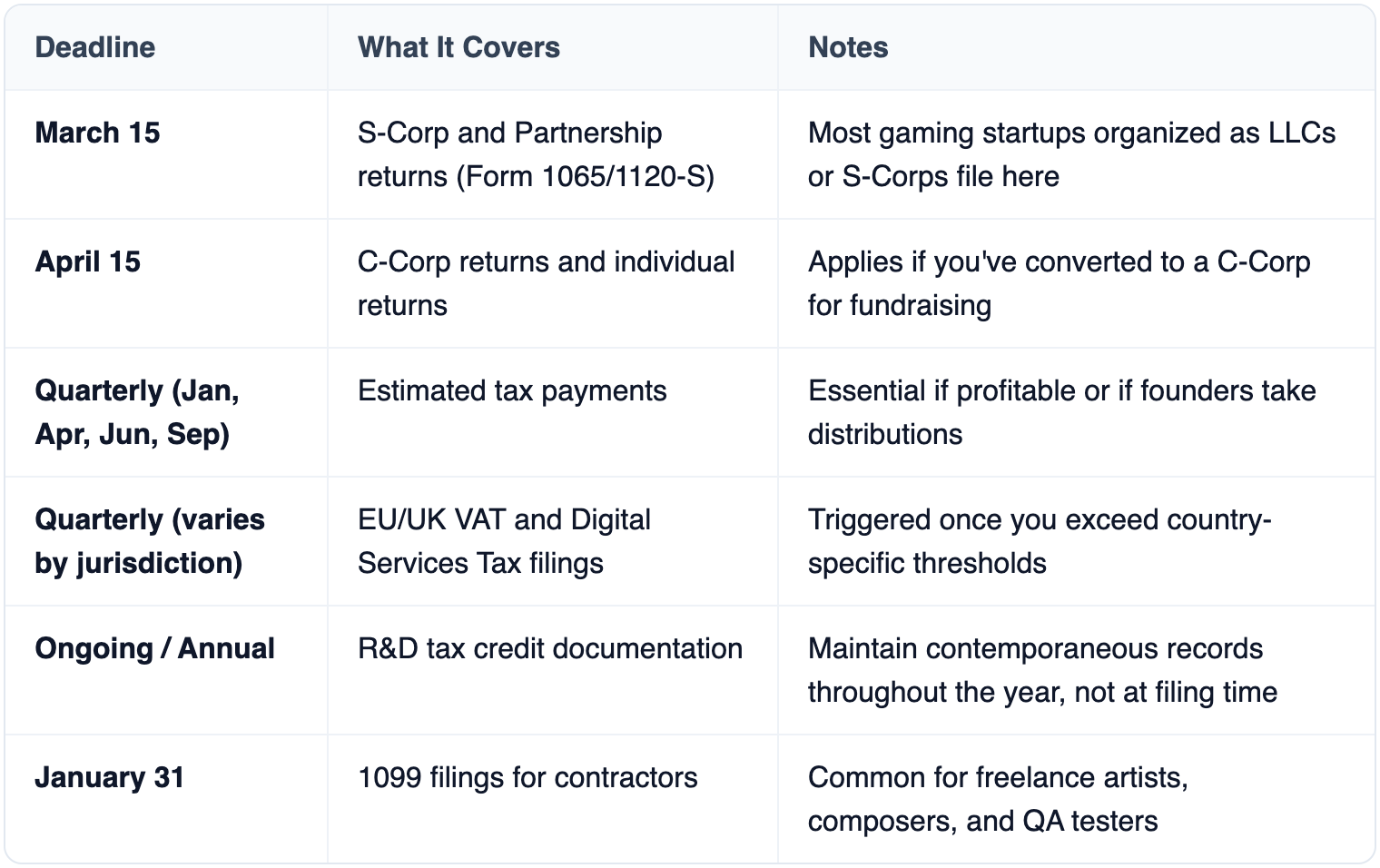
Gaming startups face a unique tax situation because their revenue is digital, global, and often subject to multiple taxing jurisdictions simultaneously. R&D tax credits are particularly relevant here: most game development activity qualifies, but documentation requirements are strict. If you're selling internationally, digital services taxes in the EU, UK, and other markets add another layer of filing obligations.
Choosing the right accounting software depends on how your studio actually operates. Here's what to prioritize:
Do gaming startups need a specialized accountant, or will any CPA work?
A general CPA can handle basic bookkeeping, but gaming-specific issues like revenue recognition for virtual goods, R&D credit qualification for game development, and international digital tax compliance require specialized knowledge. Look for firms with experience in software, SaaS, or entertainment accounting. Ask specifically whether they've handled ASC 606 implementation for digital goods.
Should I capitalize my game development costs or expense them?
It depends on your development stage. Under GAAP, costs incurred during the preliminary project phase are expensed. Once technological feasibility is established (or, under ASC 350-40, once the project reaches the application development stage), you can begin capitalizing. Post-launch maintenance costs go back to being expensed. Keep detailed time logs and project documentation to support your classification.
How should a seed-stage gaming startup set up its books?
At the seed stage, keep it simple but structured. Use accrual-basis accounting from the start, even if cash basis seems easier. Set up your chart of accounts with separate revenue streams and project-based expense tracking. Investors and acquirers expect accrual-basis financials, and converting later is painful and expensive.
What's the difference between gross and net revenue reporting for platform sales?
If you're the principal in the transaction (you set the price, bear inventory risk, and control the customer experience), you report gross revenue and record platform fees as a cost of sale. If the platform is the principal and you're essentially a supplier, you report net revenue. Most indie studios selling through Steam or app stores report net, but the analysis depends on your specific distribution agreements.
When should a gaming startup hire a fractional CFO versus a full-time bookkeeper?
A bookkeeper handles transaction recording and basic reconciliation. A fractional CFO provides strategic financial guidance: fundraising prep, financial modeling, burn rate analysis, and board reporting. Most studios need a bookkeeper from day one and should consider a fractional CFO once they're raising a Series A or managing monthly revenue above $100K. The CFO helps you tell your financial story to investors.
The gaming industry moves fast, and your accounting needs to keep pace. Startups that treat financial management as an afterthought end up scrambling during fundraising rounds, overpaying on taxes, or misrepresenting their financial position to investors. None of those outcomes are recoverable without significant cost.
Start with a properly structured chart of accounts. Track revenue by stream and expenses by project. Understand your R&D credit eligibility and document it throughout the year. Choose software that fits how gaming companies actually operate, not how a generic small business does.
This accounting guide for gaming startups isn't meant to replace professional advice. It's meant to help you ask better questions, spot red flags earlier, and build a financial foundation that supports your studio's growth. The studios that get this right spend less time fixing mistakes and more time making great games. That's the whole point.