It happened on a Tuesday.
Your client was in a board meeting. Someone pulled up the financials. And there, in a report you had already reviewed, was a duplicate posting that had been sitting in the ledger for three weeks.
Nobody caught it.
Until the board did.
Your client did not call you angry. They just got quieter. A little more hands-on with the numbers from then on. Started asking questions they never used to ask.
You did not lose the client.
But something shifted.
That shift is the thing nobody talks about. Not in accounting conferences. Not in engagement letters. Not in the post-mortem conversations firms have with themselves after a close cycle goes sideways.
It is not about the error.
Errors happen. The ledger has too many moving parts for them not to. Bank feeds, credit cards, payroll, vendors, reimbursements, one-off transactions with descriptions that look like they were typed in a hurry at midnight. A missed categorization does not mean your team is careless. A duplicate does not mean anyone forgot how accounting works.
It means volume does what volume always does.
It creates cracks.
The real question is never whether something slips through.
It is how long it sits there before someone finds it.
In most firms, that window is the close cycle itself. Work happens all month. Review happens at the end. If something went wrong in week two, the hope is that it surfaces before the package goes out.
Sometimes it does.
Sometimes your client finds it first.
And every time that happens, the relationship absorbs a small, invisible cost. Not a blowup. Not a lost engagement. Just a quiet erosion of the one thing that took years to build.
The assumption that you have it covered.
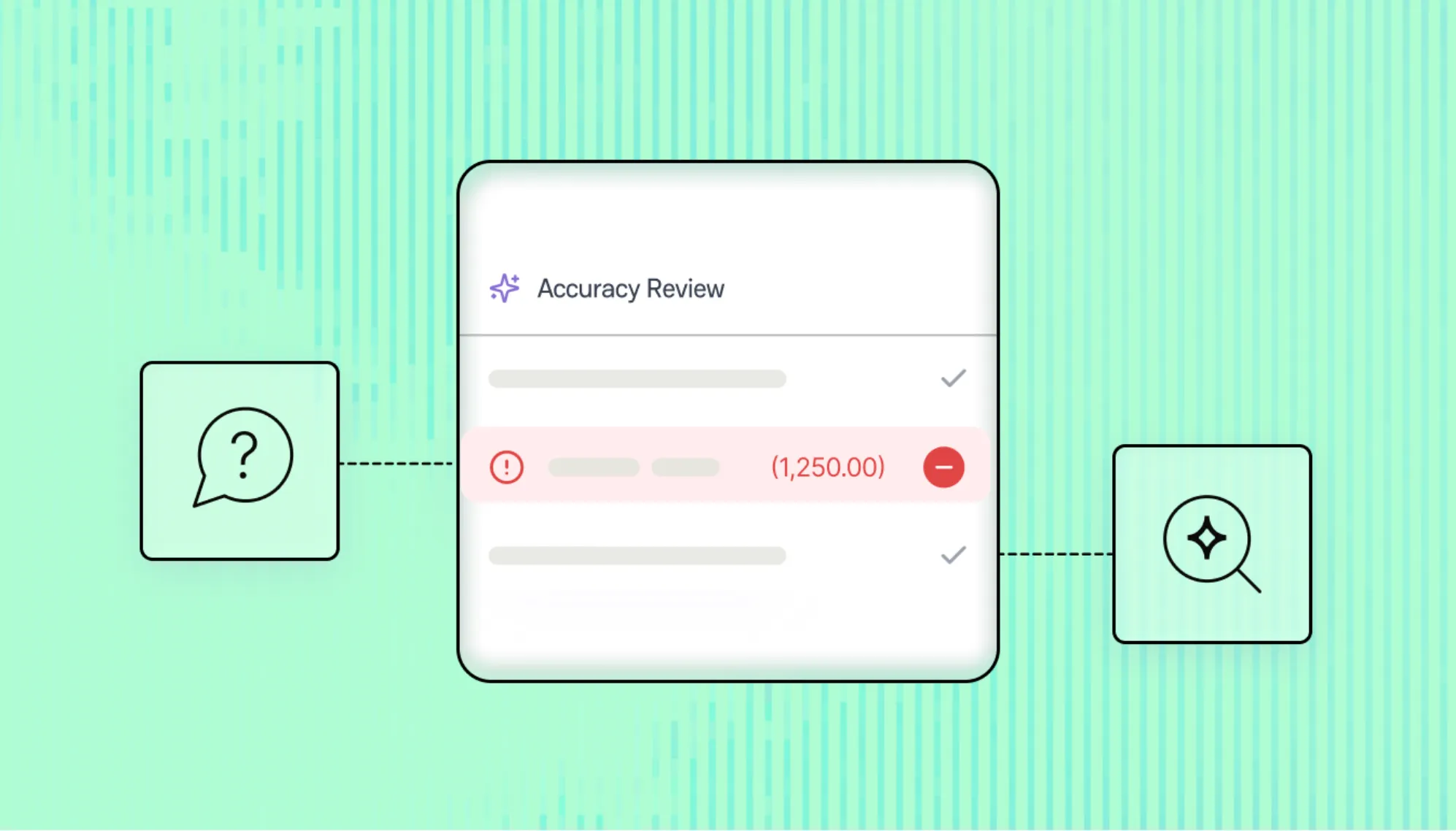
Puzzle built Accuracy AI around that exact problem.
Not to replace the accountant. Not to make decisions on your behalf. But to close the gap between when something goes wrong and when someone notices.
It is a continuous layer of automated checks running in the background while you focus on client work. Six of them, each targeting a different place where errors tend to quietly age.
Every flagged item routes back to you. The AI surfaces the work. You review it. You approve it. Nothing flagged moves without your judgment in the loop.
That is what makes it different from a system that lets errors slip through unnoticed.
This one keeps you in control and makes sure fewer things are hiding from you.
There is a version of every firm where the review portion of the close cycle is not a month-end panic ritual. Where review is not a race against the package deadline. Where the work of catching errors happens continuously, in the background, instead of all at once under pressure.
Where your client opens their financials in a board meeting and the only thing they find is exactly what should be there.
That is what Accuracy AI is built for.
Not to be the accountant.
To make sure the accountant always finds it first.