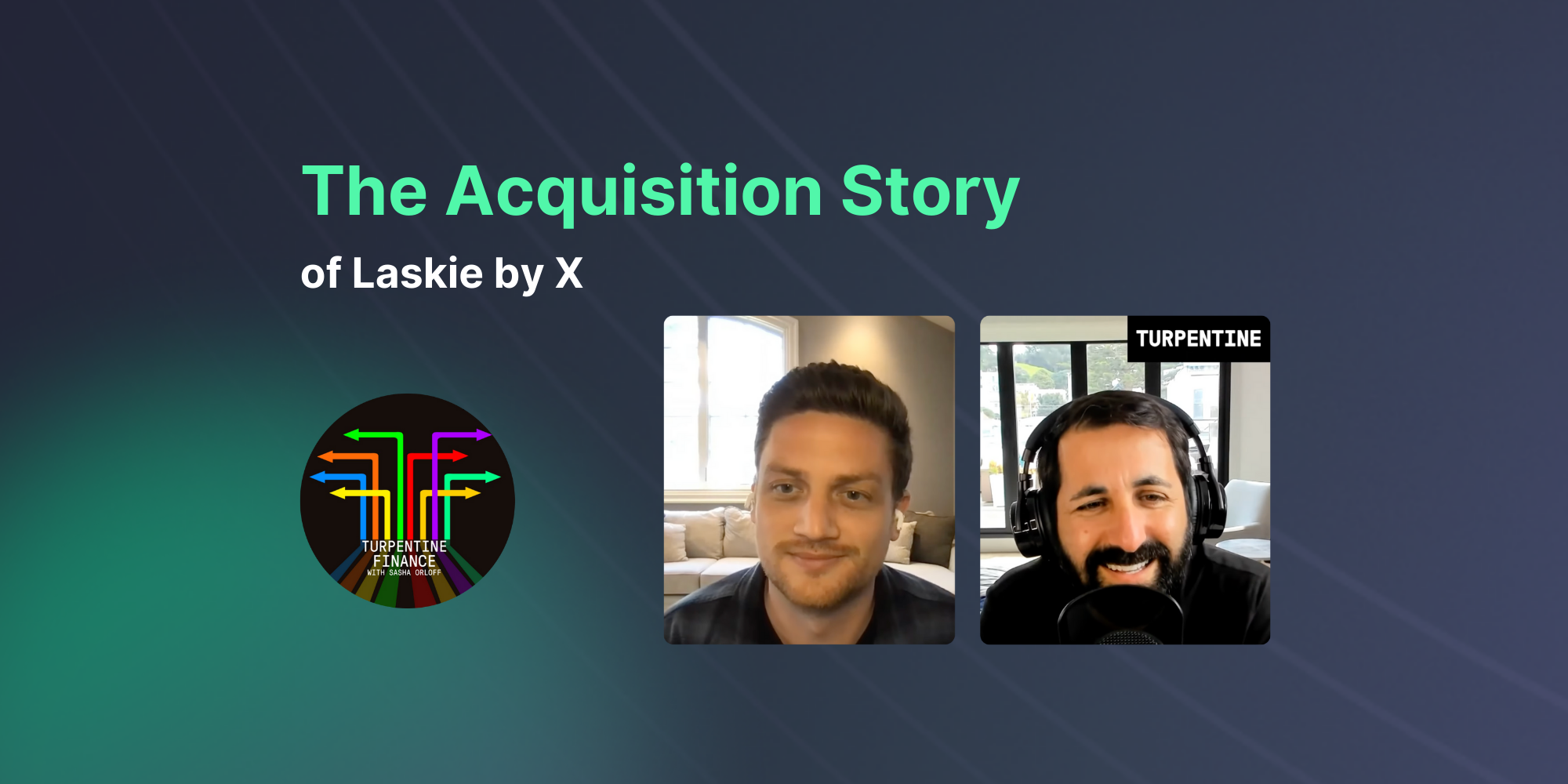
Acquisition talks can stall while your startup keeps spending. Your runway needs to cover the business without a sale.
Chris Bakke's Laskie story is a past exit, not a new deal: Twitter acquired the recruiting startup in May 2023 under Elon Musk's ownership, as Bakke later recounted in a March 2024 interview.
TLDR:
- Twitter acquired Chris Bakke's recruiting startup Laskie in May 2023 after he publicly posted his market thesis on the site.
- Bakke built Laskie for acquisition from the start: majority founder ownership, early buyer networking, and authentic public content.
- Look beyond price: structure, equity, and earnout terms can change the value of a deal.
- Only 18 companies went public in Q3 2026, so treat buyer talks as an option, not a runway plan.
- Puzzle is an AI-native accounting firm that tracks burn rate, runway, and cash and accrual reporting to help founders prepare for financial due diligence.
Building Laskie with acquisition in mind
Chris and his co-founder built Laskie to help companies recruit talent. Axios described it as a job-matching startup when reporting the acquisition. Its hiring focus matched the needs of startups building remote teams:
- Remote work made global hiring an option for employers
- Companies were desperate to fill key roles like sales and engineering
- Traditional job boards weren't innovating fast enough.
Bakke described Laskie's work as recruitment automation for recruiters and founders in his March 2024 interview. He also explained how posting about hiring on Twitter helped start the conversation with Musk.
Chris strategically designed Laskie for acquisition from the start. Here's how:
1. Early networking: Chris suggests founders adding senior industry leaders to a quarterly newsletter, and keeping their company on their radar in hopes of turning conversations into partnerships.
2. A unique content strategy: Chris used humor and observations about the tech industry to attract attention. The takeaway for founders: a public voice can create buyer interest, but attention does not guarantee a sale.
3. Build in public: Chris posted about Twitter's potential in recruiting. In his account of the deal, he said he was seeking a partnership when Musk sent him a direct message proposing an acquisition.
4. Structure for acquisition: Chris and his co-founder owned the majority of the company. This allowed them to move much faster compared to a larger company with an external board.
How Chris’ insights captured Elon Musk's attention
Around Musk's takeover of Twitter, Chris posted that the service should get into recruiting. In his March 2024 interview, he explained the thesis behind those posts: early-stage startups often hire through personal networks, and Twitter already connected founders with engineers and other potential hires. He argued that Twitter had invested too little in hiring products and was missing revenue from activity already happening there. Recruiting tools could help users find jobs while creating subscription and advertising opportunities for Twitter. Bakke said he was seeking a partnership for Laskie; Musk proposed an acquisition after seeing several of his posts.
Elon replied wanting to discuss the opportunity further.
By sharing his thoughts about the industry, Chris had caught Twitter owner Elon Musk's attention.
Laskie's merger & acquisition
According to Bakke, the talks began with a direct message from Musk, and the deal closed in May 2023 after a couple of months of negotiation.
After the acquisition, Chris worked on hiring products at X, as described in his March 2024 interview. That was the next chapter of Laskie's story, not a guarantee that every founder should accept a similar offer.
Chris advises founders to keep records ready, tell a clear company story, and review the full deal terms:
- Stay ready: Keep ownership records and IP assignments separate from your accounting checklist. For financial preparation, Puzzle maintains cash and accrual reporting from the same transaction data. That supports financial review; it does not replace legal preparation or cap table management.
- Craft your story: Help potential acquirers see your unique insights and value. Play the long game: Building relationships before an exit can help start buyer conversations.
- Think strategically: Price is one part of the deal. Consider the structure, equity, earnout, and role after the acquisition when deciding whether an offer fits your goals.
Chris later announced that he was leaving X in August 2024. As of this October 2026 update, the acquisition story should be read as a historical account, not a description of his current role.
What founders should take from this in October 2026
A buyer conversation is an option, not a runway plan. The Q3 2026 PitchBook-NVCA Venture Monitor, published October 7, reports that just 18 companies went public during the quarter and that exit opportunities remain limited despite record venture investment. A busy funding market does not guarantee a timely exit.
Bakke's relationship-building lesson still applies, but your startup needs room to keep operating if talks stall. Keep real-time books with current burn rate, runway and revenue records before approaching buyers. Separate cash already in the bank from any expected acquisition proceeds, and review proposed deal terms with legal and financial advisers. Treat acquisition readiness as ongoing preparation, not a deadline for getting acquired.
Acquisition readiness checklist for startup founders| Preparation area | What to keep ready | What to keep separate |
|---|
| Burn rate and runway | Current cash balances, burn rate and runway | Cash in the bank and expected acquisition proceeds |
| Financial records | Revenue and spend records, with cash and accrual reporting | Prepared reports and numbers reviewed for investor discussions |
| Ownership and IP | Ownership records and IP assignments | Legal preparation and your accounting checklist |
| Deal terms | Proposed structure, equity and earnout terms for review with legal and financial advisers | The headline price and the terms attached to it |
FAQ
When did Twitter acquire Laskie?
Twitter acquired Laskie in May 2023.
How did Chris Bakke start acquisition talks with Elon Musk?
Bakke posted about Twitter's opportunity in recruiting. According to his public account, he was seeking a partnership when Musk sent a direct message proposing an acquisition. Publicly sharing his market insights helped start the conversation, but that outcome is not a repeatable formula for every founder.
What should founders prepare before approaching potential buyers?
Keep cash balances, burn rate, runway, and revenue and spend records current. Prepare cash and accrual reporting for financial review. Keep ownership records and IP assignments on a separate legal checklist, and review proposed deal terms with legal and financial advisers.
Should acquisition talks change how I calculate runway?
Do not count expected acquisition proceeds as cash already in the bank. Talks can stall or end without a deal, so your startup needs enough runway to keep operating independently. Treat buyer conversations as an option while continuing to track burn rate and available cash.
How can Puzzle help with acquisition readiness?
Puzzle is an AI-native accounting firm offering accounting software and accounting services. Its cash and accrual views, burn rate and runway tracking, and financial report downloads help founders prepare for financial questions. The Puzzle AI suite prepares the work; humans review and approve it. Puzzle does not replace legal preparation or cap table management.
Be acquisition ready with Puzzle
Puzzle is an AI-native accounting firm: AI-native accounting software plus accounting services. Founders can run their books themselves or add Expert Reviewed or Full Service bookkeeping from Puzzle accountants or a vetted partner firm working in the same ledger. AI prepares the work; humans review and approve it.
- Real-time insights: Track cash, burn rate and runway with Puzzle's financial insights. Review your books before using the numbers in investor discussions.
- Cash and accrual accounting: Puzzle maintains cash and accrual views simultaneously from the same transaction data. You can switch reporting views without maintaining separate sets of transactions.
- Revenue and spend tracking: Use revenue and spend insights to prepare for questions about how your startup earns and spends money.
- Easy downloads: When investors ask, be ready. Download financial reports for review.
Source: the Turpentine Finance interview with Chris Bakke. Puzzle's software plans start at $30/month; accounting services cost extra. For help choosing the right setup for your startup, book a demo.